2026 Top SAE LED Lightbar Types for Global Buyers
In 2026, global buyers face a crowded market for emergency, utility, recovery, and fleet lighting. A Sae Led Lightbar is not simply a bright strip mounted on a vehicle. Its beam pattern, flash sequence, housing design, power demand, and control system affect real roadside performance. A low-profile bar may reduce wind noise on a service van. A wider dual-row model may deliver stronger visibility across a large work zone. These differences matter during long shifts, heavy rain, dust, and winter darkness.
This guide examines the leading SAE LED lightbar types expected to attract international buyers in 2026. It compares single-row, dual-row, mini, modular, magnetic, and permanent-mount designs. Practical details receive attention, including aluminum heat sinks, polycarbonate lenses, waterproof connectors, cable routing, and controller compatibility. Small details often decide reliability. A loose connector can matter more than a higher lumen claim. Marketing figures can also be difficult to compare fairly.
SAE performance references may support product evaluation, but they do not replace local approval requirements. Road-use rules, permitted colors, mounting heights, and flash patterns vary between countries and vehicle classes. Buyers should request test reports, ingress protection evidence, warranty terms, and installation guidance from established suppliers. No single lightbar fits every fleet. That assumption fails quickly. Some recommendations may also require revision as LED chips, optics, and regional standards develop. Careful buyers should verify current documentation before placing large orders. This approach supports safer purchasing, clearer specifications, and more dependable fleet operation.
SAE LED Lightbar Basics and Global Compliance Standards
2026 Top SAE LED Lightbar Types for Global Buyers
SAE LED lightbars are selected by flash pattern, mounting style, and tested performance—not appearance alone. In North America, buyers may encounter SAE J845 for optical warning devices and SAE J575 for environmental testing. These standards address different things. A product’s test report should identify the exact model and configuration, since lens color, modules, and mounting can affect results. “SAE compliant” on a sales page is not enough evidence by itself.
Global requirements differ. In many European markets, ECE R65 approval may apply to warning lamps, while electromagnetic compatibility requirements also need checking. The rules depend on vehicle use, light color, installation, and local approval processes. A lightbar tested to an SAE standard is not automatically approved worldwide. Ask for current reports, approval markings, and the installation instructions; confirm details with the relevant authority or qualified vehicle upfitter. Paperwork can be tedious. It matters.
Tips: Match the bar’s tested configuration to the unit you plan to buy. Check voltage, current draw, mounting points, sealing, and service access before installation. Photograph labels and keep test documents with fleet records. One detail is easy to miss: a compliant lamp can still be installed incorrectly.
Main SAE LED Lightbar Types and Their Structural Differences
2026 Top SAE LED Lightbar Types for Global Buyers
Main SAE LED Lightbar Types and Their Structural Differences
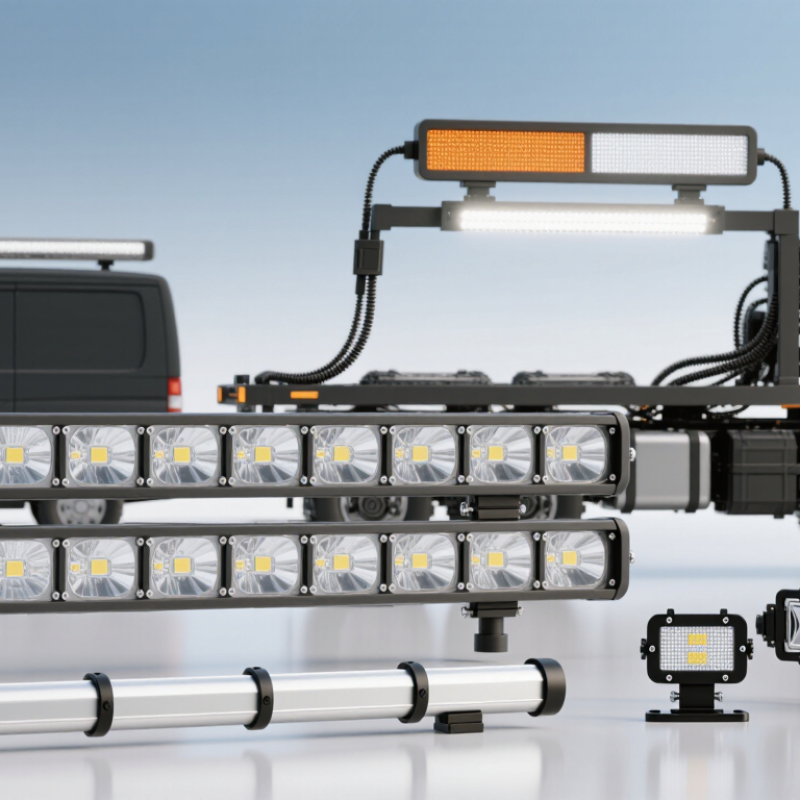
SAE LED lightbars vary in height, lens layout, and internal construction. A single-row bar places LEDs in one narrow line, creating a slim profile with fewer components across its width. It can suit vehicles with limited roof clearance, though its compact housing may restrict available lighting configurations. A dual-row design stacks two LED rows inside a deeper body. This structure allows more optical sections, but adds height and weight. Measure the mounting area carefully.
Low-profile lightbars use a shallow base and closely arranged optics. Their reduced height can help with clearance, but the beam pattern depends on the specific lens and reflector arrangement. Modular bars take a different approach: separate sections can combine warning, scene, or directional lighting functions. They are adaptable, though more connections may mean more installation checks. Construction matters as much as the label. Examine the housing, lens seals, wiring exits, and mounting points, since vibration and water exposure can reveal weak details over time.
Tips: Compare the bar’s measured dimensions with the vehicle roof and mounting brackets. Check the product documentation for SAE-related performance information, rather than assuming every bar marked “SAE” has identical output. Ask about replacement parts and sealing details. A tidy layout helps, but it does not guarantee durability. Inspect the fit after installation; small gaps are easy to miss.
Beam Patterns, Warning Modes, and Performance Features
For 2026 buyers comparing SAE LED lightbars, beam shape matters as much as brightness. A spot beam throws light farther down a road, while a flood beam spreads illumination across nearby work areas. Combo optics balance both, though the actual beam depends on lens design and mounting height. Check photometric data, not just advertised lumen figures. Details matter.
Warning modes also affect how a bar performs in daily use. Multiple flash patterns can suit different visibility needs, while synchronization helps several lamps flash together. Dimming can reduce glare during night work, and a steady-burn function may be useful for scene lighting where permitted. Confirm that controls are simple to reach and clearly labeled; complicated switches can slow an operator down.
Durability is more than a sealed housing. Review the stated ingress rating, operating-voltage range, current draw, and thermal management, then compare them with the vehicle’s electrical system. Heat matters, too. A bar that runs hot may reduce output or shorten component life. I still find beam selection easy to underestimate: a very bright spot pattern can leave the roadside dark. Before choosing, consider the vehicle’s speed, mounting position, weather exposure, and local requirements for warning lights.
Vehicle Compatibility, Installation Methods, and Control Systems
Choosing an SAE LED lightbar starts with the vehicle, not the beam shape. Check available mounting points, roof or grille clearance, and the vehicle’s electrical capacity. A bar that fits a work truck may obstruct sensors or exceed a smaller vehicle’s mounting limits. Measure the mounting area and confirm the product’s documented SAE classifications; similar-looking bars can serve different lighting functions. Measure twice.
Installation quality affects reliability. Use brackets designed for the vehicle and fasteners suited to its mounting surface. Route wiring away from hot engine parts, sharp edges, and moving components. Add suitable circuit protection, and follow the lightbar manufacturer’s wiring diagram. Poor grounding can cause flicker or intermittent operation, even when the lightbar itself is sound. Small details matter.
Control systems range from a basic cabin switch to relay-based setups or vehicle-integrated controls. Choose an arrangement that is easy to reach without distracting the driver. For advanced integration, confirm electrical compatibility before connecting to vehicle networks; a qualified installer can help prevent faults. Test each function while parked, then recheck the mounts and wiring after initial use. I would not assume one control setup suits every fleet; different vehicles often need different access and service considerations.
2026 Top SAE LED Lightbar Types for Global Buyers
Common nominal vehicle electrical-system voltages to check when selecting a lightbar.
Values show common nominal systems, not a guarantee for every vehicle; confirm the vehicle and lightbar voltage specifications before installation. Roof-mounted bars commonly use permanent brackets, while compact grille or visor lights may use dedicated brackets. Control options include a hardwired switch or controller, and vehicle-integrated controls where supported. Follow the vehicle manufacturer’s wiring and mounting guidance.
How Global Buyers Can Compare Quality, Cost, and Supplier Support
2026 Top SAE LED Lightbar Types for Global Buyers
How Global Buyers Can Compare Quality, Cost, and Supplier Support
In 2026, global buyers are comparing more than brightness when selecting SAE LED lightbars. Common types include dual-row bars, low-profile bars, and modular warning systems. Dual-row models usually deliver strong forward coverage for utility vehicles and roadside work. Low-profile designs reduce roof height and wind resistance, but may sacrifice some optical spread. Modular bars offer flexible lengths and easier part replacement. The right choice depends on vehicle height, duty cycle, climate, and regional approval requirements.
Quality should be checked through evidence, not polished photographs. Ask for beam test data, thermal records, ingress protection results, and material specifications. Inspect the lens for uniform clarity and the housing for solid seals. During evaluation, run the lightbar continuously and watch for flicker, heat buildup, or uneven output. A sample can reveal more than a catalog. Still, one test is not enough. Temperature cycling and vibration testing better reflect rough service conditions. Some suppliers provide impressive figures, yet explain them poorly. That gap deserves attention.
Compare landed cost, not only unit price. Include freight, spare modules, wiring, testing, installation, and expected replacement frequency. A cheaper bar can become expensive after repeated failures. Supplier support matters when a controller fails during a night shift. Reliable partners provide clear manuals, responsive technical replies, traceable records, and stable spare-part access. Request warranty terms, response times, and packaging photos before ordering. I would also ask for a small pilot order. It may slow purchasing. That is sometimes wiser.