10 Best 3D Printing Materials for Global Buyers?
Choosing the right 3d printing materials can determine whether a prototype becomes a reliable product or an expensive failure. Global buyers face more than a simple price comparison. They must examine strength, heat resistance, flexibility, surface finish, printability, storage needs, and regional availability. A spool of PLA may look economical, while a high-temperature polymer may better serve an automotive bracket or production fixture.
Terry Wohlers, a respected additive manufacturing analyst, has stated, “Materials are the lifeblood of additive manufacturing.” That observation remains practical today. Material behavior affects every stage, from nozzle temperature and chamber conditions to dimensional accuracy and post-processing. Buyers should also review technical data sheets, safety information, certification claims, and supplier consistency. One impressive sample is not enough. Ask for batch data.
Real-world testing matters.
This guide examines ten widely used 3d printing materials for international purchasing decisions. It considers common applications, advantages, limitations, approximate cost factors, and supply-chain concerns. The selection includes familiar options such as PLA, ABS, PETG, nylon, resin, TPU, polycarbonate, and metal powders. Some materials perform beautifully under controlled conditions but disappoint in humid workshops or poorly calibrated machines.
No ranking can fit every factory. That is worth admitting. A material suitable for a classroom prototype may fail beside an engine. Likewise, the cheapest option may create more waste through warping, failed prints, or difficult finishing. Buyers should compare actual production requirements, not marketing promises. With careful testing and supplier verification, this overview can support more confident, technically sound purchasing decisions across global markets.
How to Rank 10 Materials by Strength, Heat Resistance, Cost, and Printability
10 Best 3D Printing Materials for Global Buyers?
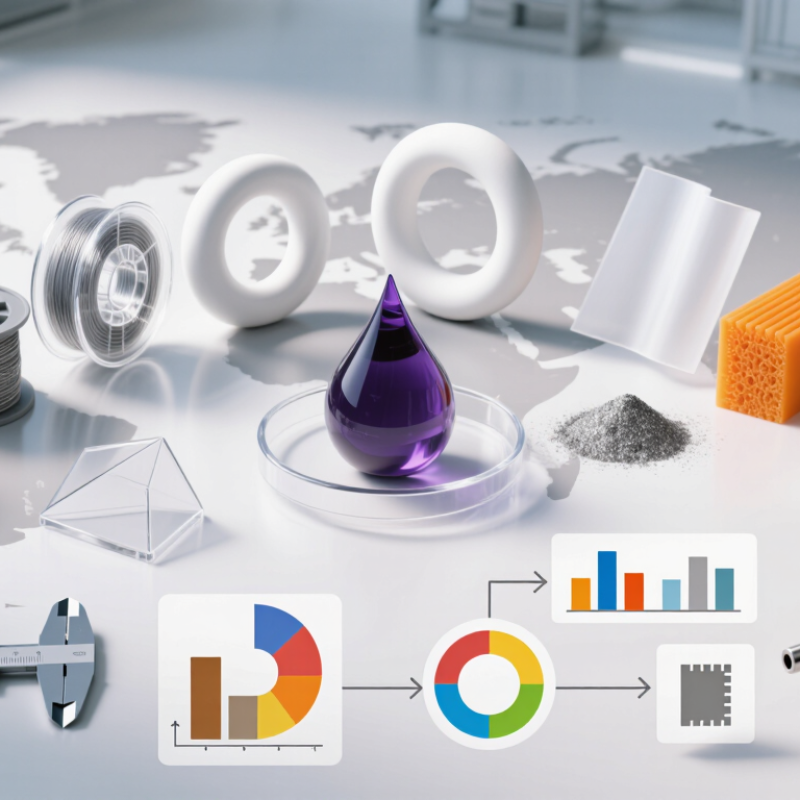
How to Rank 10 Materials by Strength, Heat Resistance, Cost, and Printability
A practical ranking should use transparent weights: strength at 30%, heat resistance at 25%, cost at 20%, and printability at 25%. Under these conditions, PEEK ranks first for demanding engineering parts, but requires expensive equipment and careful thermal control. Carbon-fiber nylon follows with excellent stiffness, lower warping, and moderate cost. Polycarbonate offers strong impact resistance and high heat performance, though moisture can reduce print quality. Nylon ranks fourth because it combines toughness and wear resistance, but needs dry storage. ASA performs well outdoors and handles heat better than common hobby plastics. ABS remains useful, yet warping and fumes require controlled ventilation.
Polypropylene is light, chemically resistant, and affordable, but weak bed adhesion limits its position. PETG offers balanced strength, cost, and easy printing for many global workshops. PLA is the most accessible choice, with sharp details and low operating cost, but softens near hot environments. TPU ranks tenth in this durability-focused model because flexible parts need different strength tests. That is not a failure.
Testing can change the order. A useful comparison prints identical test bars, dries moisture-sensitive materials, and records failure temperature. Local electricity prices, chamber availability, and shipping conditions also affect cost. I would not trust a single supplier datasheet. Humidity, layer direction, and nozzle temperature often change the result. My own scoring would still need revision after long-term outdoor testing.
Consumer Filaments: PLA, ABS, PETG, ASA, and PP—PLA Tensile Strength 50–70 MPa
For global buyers, consumer filaments differ sharply in strength, heat resistance, and printing behavior. PLA remains the easiest starting point. Its tensile strength commonly ranges from 50 to 70 MPa under controlled laboratory testing. Real parts may perform differently because layer bonding, infill, moisture, and print direction affect results.
In practical workshop use, PLA prints clean edges and holds small details, such as clips, brackets, and display parts. It can soften inside a hot vehicle, though. ABS tolerates higher temperatures but may warp without an enclosed printer and stable airflow.
PETG offers useful toughness and chemical resistance, while remaining easier to print than many engineering plastics. ASA handles sunlight better than ABS, making it suitable for outdoor housings. PP is lightweight and fatigue-resistant, but poor bed adhesion can frustrate new users.
Check the technical datasheet.
Do not compare tensile values blindly. One manufacturer may test a molded specimen, while another tests a printed sample. Standards, nozzle temperature, cooling, and specimen orientation must be recorded.
I once treated a strong PLA result as universal and overestimated a thin wall’s durability. That mistake changed my design practice.
For load-bearing parts, increase wall thickness, round sharp corners, and test several printed samples. Moisture also matters, especially for PETG and PP. Store filament in sealed containers with desiccant, then inspect the first layers before a long production run.
Engineering Polymers: PC, Nylon, TPU, PEEK, and PEI by ASTM/ISO Data
10 Best 3D Printing Materials for Global Buyers?
For demanding parts, engineering polymers need more than attractive datasheet numbers. PC offers strong impact resistance and useful heat performance, while Nylon provides toughness and low friction. TPU suits flexible seals, grips, and vibration parts. PEEK and PEI withstand higher temperatures, chemicals, and mechanical loads, but they require carefully controlled printing conditions. These materials are among the strongest choices in a ten-material sourcing shortlist.
Compare test methods before comparing values. Tensile strength should reference ASTM D638 or ISO 527. Flexural results commonly follow ASTM D790 or ISO 178, while impact data may use ASTM D256 or ISO 180. A buyer should check specimen orientation, print temperature, layer height, and conditioning time. Nylon can absorb moisture quickly. That changes stiffness and dimensional accuracy. PEEK and PEI may also need heated chambers and post-processing. Real parts often perform differently from polished samples. This is where many evaluations become too optimistic.
Tips: Request dry and conditioned data. Ask for machine settings, not only material names. Test a small batch before global purchasing. Keep records of temperature, humidity, and failure mode. A supplier’s ASTM or ISO result is useful, but it is not a guarantee for every printer. I have seen excellent tensile values fail in thin-wall parts because layer bonding was ignored. Repeating tests across orientations may feel slow, yet it exposes weaknesses early. The best material is not always the strongest one. It must match the load, environment, production method, and inspection standard.
Testing Standards: ASTM F42, ISO 527 Tensile Strength, and ISO 75 Heat Resistance
Choosing among ten common 3D printing materials requires more than reading a tensile-strength number. The group may include PLA, ABS, PETG, nylon, polycarbonate, polypropylene, TPU, PEEK, PEI, and photopolymer resin. Each material behaves differently after printing. ASTM F42 provides the additive manufacturing framework behind many test methods and terminology. However, F42 is not one universal pass-or-fail test. Buyers should request the exact standard, specimen design, and laboratory conditions.
ISO 527 measures tensile properties, including strength, elongation, and modulus. A printed coupon can fail along its layer lines, even when the raw material appears strong. Therefore, test orientation matters. Ask whether specimens were printed flat, upright, or across the load direction. Record nozzle temperature, layer height, infill, and conditioning time. I have seen impressive data become less useful when these details were missing. Small details matter.
ISO 75 evaluates temperature of deflection under load, often used to judge heat resistance. It does not describe every high-temperature application. A part may survive a warm enclosure but deform under continuous pressure. Compare the reported temperature, applied stress, specimen thickness, and conditioning method. Results should come from traceable testing, preferably with calibrated equipment and clear laboratory records. Be cautious with perfect-looking charts. Real parts contain voids, uneven cooling, and design stress. Testing gives evidence, not certainty.
10 Best 3D Printing Materials for Global Buyers
Representative tensile strength and heat resistance values for commonly used, unfilled 3D-printing materials
Values are indicative reference points and can vary with material grade, moisture, print orientation, infill, layer bonding, and test conditions. Tensile strength is shown in MPa and is generally evaluated using ISO 527. Heat resistance is represented by an indicative heat-deflection temperature in °C, commonly evaluated under ISO 75 conditions. ASTM F42 provides the additive manufacturing standards framework used by many laboratories and manufacturers.
Global Buyer Checklist: Certifications, Moisture Control, Supply, and Total Cost
10 Best 3D Printing Materials for Global Buyers?
Global buyers should evaluate more than strength, color, or print temperature. Request current technical data sheets, safety documents, and certification records for each material. Confirm whether certificates match your destination market and intended application. Do not accept vague claims such as “industrial grade.” Ask for batch traceability, test methods, and manufacturing dates. Documents matter.
Moisture control can decide print quality. Filaments should arrive in sealed packaging with desiccant and clear storage instructions. Check whether the supplier provides drying temperatures and recommended storage humidity. During purchasing, compare shelf life, packaging strength, and re-drying options. A damaged carton may expose material before production begins. Supply reliability also requires realistic lead times, reserve stock, and consistent batch testing. I once underestimated rejected parts and transport delays. The cheaper quote became expensive.
Tips: Calculate total cost, not only the material price. Include shipping, duties, testing, drying energy, waste, and failed prints. Request a small sample from the intended production batch. Compare its moisture response, dimensional stability, and surface finish. Keep records of supplier responses. They reveal reliability over time. A simple checklist helps, but it cannot replace practical trials.