China Top Solids Control Agitator Manufacturer Supplier

China has become an important manufacturing base for drilling and mud-system equipment. Demand remains connected to global exploration, production, and well-servicing activity. The International Energy Agency’s Oil 2024 report projects global oil demand to reach about 105.4 million barrels per day by 2030. Baker Hughes International Rig Count data also shows continuing worldwide drilling activity, despite monthly fluctuations. These trends keep dependable solids handling equipment commercially important.

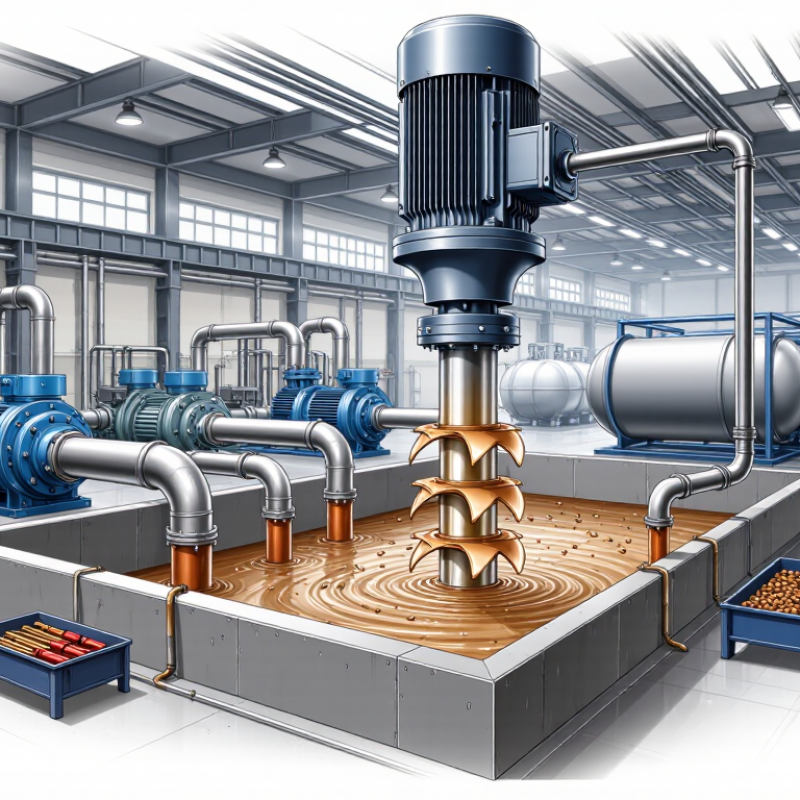
A Solids Control Agitator keeps drilling fluid components suspended inside active mud tanks. Its rotating impeller reduces settling, supports consistent fluid properties, and helps protect downstream shale shakers, desanders, and centrifuges. In a working tank, performance can be seen clearly: fewer settled cuttings, smoother circulation, and less manual cleaning around the tank floor. However, agitator selection should follow mud density, viscosity, tank geometry, temperature, and solids loading. One model cannot fit every drilling program.

Experienced Chinese manufacturers should provide more than a motor and impeller. Buyers should examine shaft sealing, gearbox service factors, explosion-protection options, material certificates, vibration testing, and documented factory inspections. API specifications and recognized electrical safety practices offer useful benchmarks, but compliance claims require verification. No supplier is perfect. Even a strong factory may need to improve documentation, response time, or field support. Reliable suppliers therefore share test records, spare-parts lists, installation guidance, and realistic delivery terms. This article examines how to evaluate China’s leading Solids Control Agitator manufacturers and suppliers through engineering capability, production consistency, customization, and after-sales evidence.

China Top Solids Control Agitator Manufacturer Supplier

Solids Control Agitators: Definition and Core Operating Principles

Solids Control Agitators: Definition and Core Operating Principles

A solids control agitator is a mechanical device that keeps drilling-fluid particles suspended inside a tank. It uses a motor, shaft, and impeller to create controlled liquid movement. Without steady circulation, heavier solids settle on the tank bottom. This can reduce usable volume and complicate cleaning. In field operation, technicians often inspect the fluid surface for dead zones, uneven flow, or excessive vibration.

The agitator’s core principle is simple: transfer rotational energy into the fluid. The impeller pushes liquid outward or downward, depending on its design and position. This movement lifts settled particles and distributes them through the active fluid. Tank shape, fluid viscosity, solids concentration, and impeller diameter all affect performance. Baffles can limit swirling and improve vertical circulation. Higher speed is not always better. Excessive speed may increase wear, foam, and energy use.

A reliable selection process considers torque, operating depth, maintenance access, and motor protection. Operators should compare actual fluid conditions with the original design assumptions. A unit that performs well with light fluid may struggle when density rises. That gap is easy to overlook. Even a well-built agitator can underperform when the shaft is misaligned or the impeller is partially blocked. Regular checks of bearings, seals, fasteners, and current draw provide useful evidence before failure occurs. Real operating data should guide adjustments, not appearance alone.

Types of Agitators Used in Solids Control Systems

China Top Solids Control Agitator Manufacturer Supplier

Types of Agitators Used in Solids Control Systems

Agitators keep drilling fluids moving inside mud tanks, preventing barite and drilled cuttings from settling. Paddle agitators provide steady, low-shear circulation and suit many storage compartments. Turbine agitators create stronger radial flow, helping break up heavier sediment near tank bottoms. Hydrofoil designs move fluid efficiently with lower power demand, which can reduce operating costs. Helical or screw-style agitators support vertical circulation in deeper tanks, although their installation needs careful clearance checks.

Selection depends on fluid density, viscosity, tank geometry, and expected solids loading. A high-speed unit is not always better. Excessive shear may affect certain additives, while insufficient torque can leave a thick layer beneath the blades. Field inspections often reveal uneven mixing caused by poor blade placement, worn impellers, or blocked suction paths. No design is perfect. This is where practical judgment matters. Operators should compare actual tank behavior with calculated performance instead of trusting specifications alone.

Tips: Check the tank bottom after circulation stops. A thin settled layer may be normal, but deep deposits signal poor flow. Keep blades clear of internal supports and inspect shaft alignment during maintenance. Start with moderate speed, then adjust gradually while watching motor load and fluid movement. Small changes can improve mixing. However, site conditions may expose weaknesses that laboratory testing misses.

Key Performance Factors for Selecting a Chinese Manufacturer

Selecting a Chinese solids control agitator manufacturer requires more than comparing prices. Start with application data: tank volume, mud density, viscosity, solids concentration, operating temperature, and required mixing time. Agitator torque and impeller diameter should match these conditions. A higher rpm rating may look attractive. However, excessive speed can increase wear, foam, and power consumption.

The U.S. Department of Energy reports that motor-driven systems use about 68% of industrial electricity in the United States. Therefore, verify motor efficiency, gearbox losses, starting current, and variable-frequency-drive compatibility. Ask the manufacturer for measured torque curves, vibration results, noise readings, and factory acceptance records. ISO 9001 certification supports process control, but it does not replace product testing. Request material certificates for shafts, impellers, and wetted components. Corrosion resistance matters when drilling fluids contain salts or abrasive particles.

Tips: Visit the factory, if practical. Inspect machining areas, balancing equipment, test tanks, and spare-parts storage. Check whether drawings show shaft diameter, seal design, flange dimensions, and protection ratings. Confirm compliance with the destination market’s electrical and machinery requirements. A supplier that answers slowly may still build good equipment, but unclear technical replies create operational risk. I have seen specifications accepted too quickly, with tank geometry discussed only after production started. That mistake is expensive. Use a signed data sheet, witnessed testing, and clear warranty limits before placing an order.

The chart presents a practical procurement weighting for evaluating a Chinese solids control agitator manufacturer. Performance compatibility, material quality, reliability, certification, customization capability, delivery, and after-sales support are commonly reviewed during industrial equipment sourcing. The percentages are non-branded reference weights for initial supplier screening.

Manufacturing Standards, Quality Control, and Customization Options

China Top Solids Control Agitator Manufacturer Supplier

For a solids control agitator supplier, manufacturing standards begin with design evidence, not slogans. An ISO 9001 system should connect drawings, material certificates, welding records, and final inspection. The ISO Survey 2023 recorded 1,265,216 ISO 9001 certificates worldwide for 2022, showing how widely quality systems are adopted. Certification alone proves little. Its daily execution matters more.

Quality control should reflect field conditions. Inspectors can verify shaft runout, impeller balance, gearbox noise, motor insulation, and flange dimensions. A factory acceptance test should record current, vibration, rotation direction, and operating temperature. ISO 21940 provides a recognized framework for rotor balancing. IEC 60034-30-1 supports motor efficiency classification. Small measurement gaps can become large maintenance problems.

Customization requires engineering discipline. Tank diameter, fluid density, solids concentration, temperature, and required mixing intensity should shape the agitator specification. The IEA’s Energy Efficiency 2023 report identifies industry as consuming about 37% of global final energy, so motor selection deserves serious attention. However, higher power is not always better. Excessive shear may damage sensitive materials or waste electricity. A supplier should provide calculations, test results, and clear operating limits. The uncomfortable part is simple: many projects still customize too late, after fabrication begins. That habit deserves reconsideration.

China Top Solids Control Agitator Manufacturer Supplier - Manufacturing Standards, Quality Control, and Customization Options
Data Category Manufacturing Standard or Parameter Typical Technical Data Quality-Control Method Customization Options
Quality Management ISO 9001 quality management system Documented control of design, purchasing, production, inspection, nonconformity, and corrective actions Controlled procedures, inspection records, internal audits, and traceability reviews Customer-specific inspection and test plans, document packages, and approval workflows
Oilfield Quality Framework API Spec. Q1, when contractually required Quality-system requirements commonly applied to manufacturers serving the petroleum and natural-gas industry Procedure review, supplier evaluation, production records, and final release documentation Project-specific quality plans and additional hold or witness points
Equipment Function Solids-control tank agitation Maintains suspension of drilled solids and helps reduce sedimentation in mud tanks and mixing compartments Operational test for rotation, vibration, noise, leakage, and motor current Impeller diameter, blade profile, shaft length, rotation direction, and installation position
Drive Configuration Electric motor and gearbox arrangement Common configurations include direct drive and geared drive; motor speed and gearbox ratio are selected according to tank duty Nameplate verification, no-load run test, alignment check, and gearbox inspection IEC or NEMA motor frame, voltage, frequency, hazardous-area certification, brake, and variable-frequency-drive compatibility
Motor Standard IEC 60034 series or applicable local electrical standard Three-phase induction motors are commonly selected for industrial agitator service Insulation resistance, winding resistance, rotation direction, nameplate data, and running-current checks Rated voltage, 50 or 60 Hz frequency, power rating, efficiency class, enclosure, and temperature-rise requirements
Ingress Protection IEC 60529 IP rating IP55 is commonly used for protected industrial motors; higher protection may be specified for wet or dusty locations Verification of enclosure construction, cable glands, terminal-box sealing, and certification documents IP55, IP56, IP65, or another rating subject to motor and enclosure availability
Impeller Design Axial-flow or pitched-blade impeller Used to generate vertical or directional circulation with comparatively low-to-moderate shear Dimensional inspection, blade-angle measurement, weld inspection, and rotational balance testing Two-, three-, or four-blade designs; blade pitch, diameter, material, and anti-wear protection
Shaft Material Carbon steel or stainless steel selected for service conditions Common choices include stainless steels such as 304 or 316/316L for improved corrosion resistance Material certificates, dimensional checks, straightness measurement, and surface inspection Material grade, shaft diameter, shaft length, coating, and corrosion allowance
Impeller Material Fabricated or cast steel construction Carbon steel, 304 stainless steel, and 316/316L stainless steel are commonly used depending on mud chemistry Material verification, weld visual inspection, dimensional inspection, and surface-finish checks Stainless steel, abrasion-resistant steel, rubber-lined surfaces, or replaceable wear components
Welding Control Qualified welding procedures and qualified welders Welding requirements are established according to material, thickness, joint design, and applicable project specifications Visual inspection plus dye penetrant, magnetic-particle, ultrasonic, or radiographic testing when specified Weld inspection level, welding consumables, post-weld treatment, and inspection documentation
Rotational Balance ISO 21940-11 balancing principles Balance quality is selected according to rotor speed, mass, operating environment, and customer requirements Dynamic balancing report identifying correction locations, residual unbalance, and test speed Specified balance grade, overspeed test requirement, and customer-approved acceptance criteria
Vibration Control Condition monitoring based on operating speed and equipment duty Vibration limits should be established for the complete assembly and verified during the factory run test Vibration measurement at bearing housings or motor locations under no-load or simulated operating conditions Alarm values, monitoring points, accelerometers, vibration switches, and remote monitoring interfaces
Bearing Arrangement Sealed or grease-lubricated bearing assembly Bearing selection depends on radial load, axial load, shaft speed, contamination risk, and service temperature Bearing model verification, lubrication inspection, shaft runout measurement, and temperature monitoring Bearing type, lubrication interval, grease specification, seal arrangement, and spare-bearing package
Shaft Sealing Mechanical seal, lip seal, or sealed bearing arrangement Seal selection depends on tank liquid, solids concentration, temperature, pressure, and shaft speed Seal-material verification, visual inspection, run test, and leakage check Single or cartridge mechanical seal, seal faces, elastomer material, flush arrangement, and dry-running protection
Corrosion Protection Protective coating system for carbon-steel surfaces Surface preparation and coating thickness are specified according to the operating environment and coating system Surface-cleanliness inspection, coating-thickness measurement, adhesion testing when specified, and holiday testing where applicable Epoxy, polyurethane, zinc-rich primer, color, coating thickness, and customer-approved paint system
Dimensional Inspection Manufacturing drawing and approved tolerance schedule Critical dimensions include shaft diameter, shaft length, impeller diameter, mounting-hole pattern, and coupling dimensions Calibrated measuring tools, inspection reports, drawing revision control, and final dimensional release Tank opening size, flange standard, mounting height, nozzle orientation, and skid interface dimensions
Factory Acceptance Test Functional and mechanical run testing Typical checks include start-up, rotation, noise, vibration, current, temperature, leakage, and emergency-stop response where applicable Recorded test readings compared with approved acceptance criteria Witness testing, third-party inspection, extended run duration, and customer-supplied test forms
Electrical Safety Motor protection and control-panel requirements Protection may include overload, short-circuit, phase-loss, under-voltage, and emergency-stop functions Continuity test, insulation test, control-function test, grounding verification, and panel inspection Local control station, remote start/stop, VFD control, interlocks, PLC signals, and communication protocols
Hazardous-Area Use Area classification and applicable explosion-protection requirements Motor and electrical components must match the site classification, gas group, temperature class, and certification requirements Certificate review, nameplate verification, cable-entry inspection, and installation-document review Explosion-proof, increased-safety, or other certified equipment subject to project jurisdiction and availability
Documentation Manufacturing and quality dossier Common documents include approved drawings, material certificates, inspection reports, test reports, manuals, and spare-parts lists Document-index review, revision control, certificate traceability, and final dossier approval Language, document format, electronic or hard-copy submission, certificates of conformity, and additional inspection records

Applications, Maintenance, and Supplier Evaluation Criteria

China Top Solids Control Agitator Manufacturer Supplier

Solids control agitators keep drilling fluids blended and reduce barite settling in active tanks. They support consistent density, stable viscosity, and smoother transfer between treatment stages. Common applications include mud tanks, reserve pits, mixing tanks, and chemical preparation systems. Correct impeller design matters. A high-torque agitator suits heavy fluids, while excessive speed may create unwanted foam and energy loss. Tank geometry also affects circulation.

Maintenance should follow operating conditions, not only calendar dates. Inspect shafts, impellers, seals, couplings, and bearings for wear or leakage. Record vibration, noise, temperature, and motor current during routine checks. Unexpected power increases can indicate solids buildup or misalignment. Clean settled material around the impeller carefully. Small faults grow quickly. However, maintenance plans are not perfect; fluid chemistry, temperature, and operator habits can change actual wear rates.

Tips: Ask suppliers for torque curves, wetted-part materials, motor data, and factory test records. Review their experience with similar tank sizes and fluid densities. Confirm spare-part availability, inspection procedures, warranty terms, and technical response times. A reliable supplier should explain limitations, not promise universal performance. Request a clear drawing and operating range before purchase. Compare lifecycle cost, not only the quoted price. A lower initial cost can hide weak seals, difficult servicing, or long delivery delays.

Top