How to Choose the Best SLS Printing Materials for Your Projects?
Choosing the right SLS printing materials is crucial for project success. According to a report by IDTechEx, the global market for additive manufacturing materials is projected to reach $13.7 billion by 2023. This booming industry emphasizes the importance of selecting suitable materials for accurate and efficient 3D printing.
When considering SLS printing materials, several factors come into play. Material properties such as strength, flexibility, and thermal resistance directly affect the final product quality. In fact, the right material can enhance performance and reduce production costs. However, not all materials are created equal; many can compromise quality and durability.
The evolving landscape of SLS printing materials brings both opportunities and challenges. Selecting the best option requires a balance between cost, material characteristics, and intended use. Users must reflect on their selection criteria and ensure they fully understand how material choices influence outcomes. The right decisions can lead to innovation, while poor choices may hinder progress.
Understanding SLS Printing: An Overview of Selective Laser Sintering
Selective Laser Sintering (SLS) is an advanced 3D printing technique. It works by using a laser to fuse powdered materials layer by layer. This process allows for creating complex geometries that are difficult to achieve with traditional manufacturing methods. The precision of SLS makes it popular in industries like aerospace and healthcare.
One of the notable benefits of SLS is its ability to use a wide range of materials, including plastics and metals. This versatility enables designers to experiment with different properties and aesthetics. However, choosing the right material can be challenging. Factors such as strength, flexibility, and heat resistance must be considered. Experimenting with different materials can sometimes lead to unexpected results, prompting a need for adjustments in design.
SLS printing may not always yield flawless results. Surface finish can vary, and support structures may be necessary. These aspects can lead to additional post-processing work, which should be factored into project timelines. Each SLS project may teach valuable lessons about material performance and design optimization.
Key Factors to Consider When Selecting SLS Printing Materials
When selecting SLS printing materials, several key factors come into play. Material properties are crucial. For instance, thermal and mechanical characteristics determine the final part's performance. According to a study by the American Society of Mechanical Engineers, using materials with superior heat resistance can enhance durability in functional prototypes. Each project may require different strengths; understanding these demands is vital.
Another factor is the intended application. SLS materials vary widely in terms of flexibility, rigidity, and surface finish. For example, while rigid nylon offers great tensile strength, rubber-like materials provide excellent elasticity. Data indicates that parts printed with elastomeric materials can withstand impacts better, making them suitable for specific applications. Balancing performance and cost is also important. Advanced materials might enhance quality but can also increase project expenses.
Tips: Always consider the environmental impact of your material choice. Look for biodegradable options whenever possible. Regularly review industry reports to stay updated on emerging materials. This will enhance the relevance and sustainability of your projects. Experimentation with different materials can lead to unexpected results, prompting a deeper understanding of SLS capabilities. Embrace the iterative process for continuous improvement.
Types of Materials Commonly Used in SLS Printing Applications
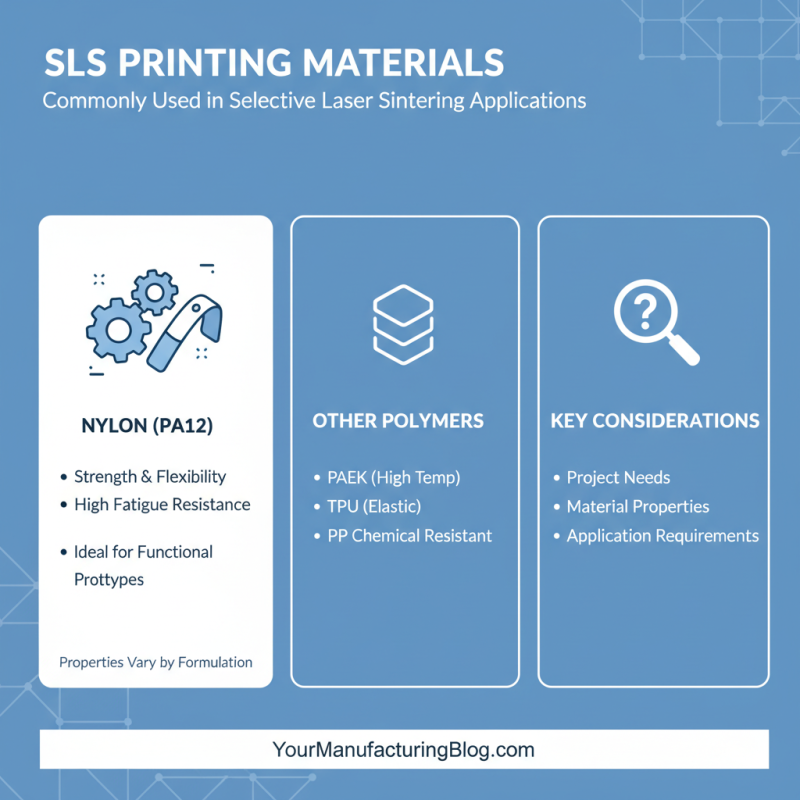
Selective Laser Sintering (SLS) offers a range of materials, each suited for different project needs. The most common material is nylon, known for its strength and flexibility. It can withstand considerable fatigue, making it an ideal choice for functional prototypes. However, nylon's properties can vary based on the specific formulation used. It is essential to understand these differences to select the right version for your application.
Another notable material is glass-filled nylon. This variant increases stiffness and strength, ideal for parts requiring higher load-bearing capabilities. However, working with glass-filled materials can result in increased brittleness, a factor that designers must consider. Similarly, metal powders are increasingly being used in SLS. They allow for creating highly detailed and durable metal components. Yet, these materials necessitate more complex post-processing, which can add time and cost.
Each material choice comes with trade-offs. Understanding their mechanical properties and limits is crucial. It might be tempting to go for the most advanced material available, but practical application may dictate otherwise. Balancing performance and usability is key to creating successful SLS projects.
Evaluating Properties of SLS Materials for Specific Project Needs
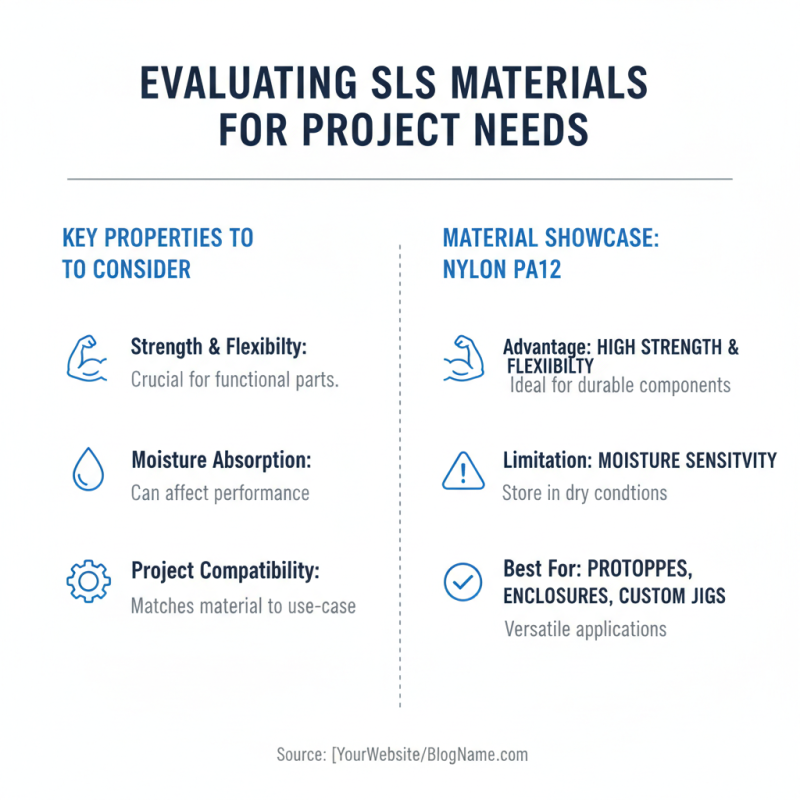
When selecting SLS printing materials, understanding their properties is crucial. Different materials offer unique characteristics that can impact the outcome of your projects. For instance, nylon is a popular choice due to its strength and flexibility, making it ideal for functional parts. However, it can absorb moisture, which may affect the performance of finished products.
Another consideration is the thermal properties of the materials. High-performance applications may require materials with better heat resistance. Some materials can withstand high temperatures, while others may deform. Experimenting with various options allows for a practical evaluation of how they respond under different conditions.
The choice of SLS material often depends on the desired finish and application. Some materials produce rough surfaces, while others can deliver a smooth finish. It's important to assess your project requirements critically. Reflecting on past experiences can help inform these decisions. Ultimately, the right material enhances not just functionality but also the aesthetic quality of your designs.
Cost Considerations and Sourcing Strategies for SLS Printing Materials
When selecting SLS printing materials, cost considerations are crucial. Various materials have different price ranges, affecting budget allocation for projects. For example, nylon is often less expensive than high-performance polymers. However, the choice should also consider the material's properties, such as strength and flexibility. This balance between cost and quality requires careful evaluation.
Sourcing strategies can make a significant difference in material costs. Bulk purchasing can lead to discounts, benefiting larger projects. Local suppliers may offer lower shipping costs, adding value to procurement efforts. It is essential to perform market research to determine the most reliable suppliers. Engaging with multiple vendors can create competition, potentially driving down prices. Regular checks of material availability are important, as shortages can lead to unexpected expenses.
Quality must not be compromised in cost-cutting efforts. Materials that seem inexpensive may not deliver the desired results, leading to higher costs down the line. Sometimes, seeking more affordable options results in frustration when they don’t meet project standards. The quest for the best material can be challenging, but evaluating both cost and quality is imperative for success.