Why Choose the Right Discharge Hose Coupler?
Choosing a Discharge Hose Coupler is not a minor purchasing detail. The connection affects how securely a hose joins a pump, pipe, or other equipment. A poor fit can cause leaks, interruptions, or extra strain on the hose. Small details matter.
Start by checking the hose’s inside diameter, the coupler’s connection style, and the pressure rating of every connected component. Ratings should suit the actual operating conditions, not just the pump’s advertised maximum. Consider the fluid, temperature, and work environment, too. A coupler used near abrasive surfaces may need different protection from one used in a clean, stationary setup. Materials and seals should be compatible with the fluid; assumptions here can be costly.
The right choice also depends on how often the connection will be assembled and removed. A quick-connect design may save time, while a threaded or clamped connection may better suit a fixed installation. Neither is automatically best. Check manufacturer specifications, confirm that the parts are designed to work together, and inspect sealing surfaces for wear before use. Even a correctly sized coupler can perform poorly if its gasket is damaged or the connection is not fully secured. In practice, selection is sometimes less tidy than a chart suggests: existing equipment, space, and maintenance habits all shape the decision. Careful checks help narrow the options and support a reliable connection.
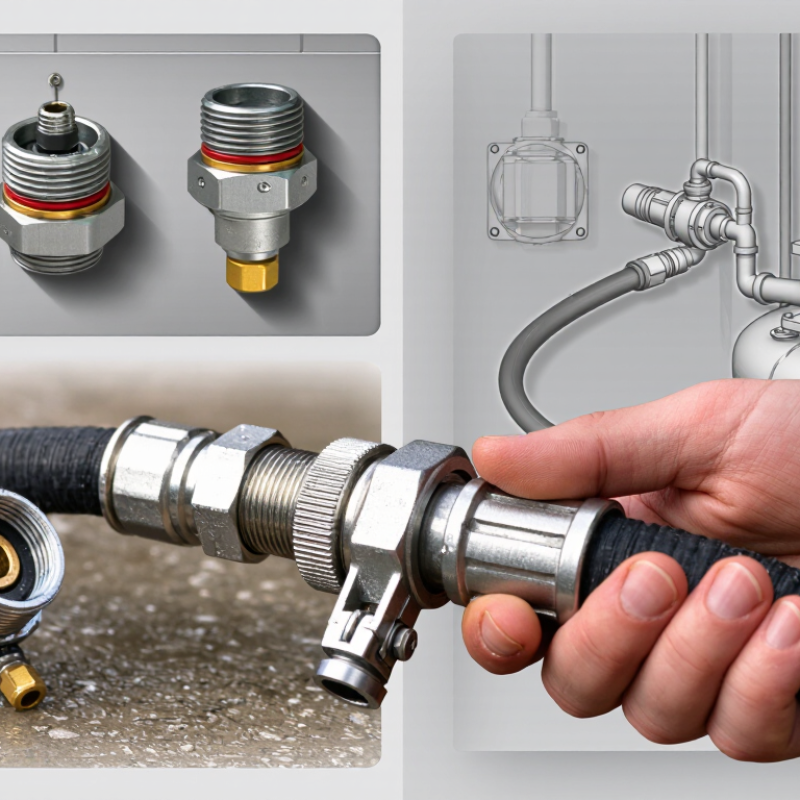
What a Discharge Hose Coupler Is and How It Works
A discharge hose coupler is the fitting that connects a hose to a pump, pipe, or another hose. It creates a joined path for moving water or other compatible fluids. The coupling may use threads, locking arms, or another joining method. Each design has its own matching connection. A gasket or seal sits between mating surfaces to limit leakage. The coupler does not increase pump capacity; it helps maintain a continuous, controlled connection.
During operation, fluid pressure pushes against the hose and its fittings. The coupler must stay engaged and sealed under the system’s working conditions. Before connection, check that the sizes and connection types match, and inspect the sealing surface for grit, cracks, or flattening. A small piece of debris can spoil the seal. It is tempting to treat a tight connection as proof of a good one; that assumption deserves a second look. Follow the specified pressure rating, and avoid forcing parts that do not align. Small leaks matter. A brief low-pressure check can reveal a loose joint before full flow begins. Recheck the connection if the hose shifts or the flow changes.
How Couplers Connect Hoses to Pumps and Discharge Systems
Why Choose the Right Discharge Hose Coupler?
A discharge hose coupler links the hose to a pump outlet or discharge line. It must match the hose diameter, connection type, working pressure, and fluid conditions. A mismatch can cause leaks, hose movement, or a restricted flow path. Small parts matter. Check that seals sit flat, locking parts engage fully, and the connection remains accessible for inspection. A tight fit is not automatically a correct fit.
The U.S. Department of Energy’s Improving Pumping System Performance guide reports that pumping systems use nearly 20% of global electricity, and can account for 25–50% of energy use in some industrial facilities. These figures describe complete pumping systems, not couplers alone. Still, a poorly matched or leaking connection can undermine system performance. For a practical check, compare the coupler’s pressure rating with the hose assembly rating, and confirm compatibility with the pumped liquid and operating temperature.
Installation details matter. Keep the hose aligned with the pump outlet, rather than forcing a bend directly beside the coupling. After start-up, look for seepage, vibration, and movement under load. A dry connection during a brief test may not stay dry during a longer run. This is easy to overlook. Recheck after the system has operated, and record the coupler type and inspection date so the next maintenance check has useful context.
How to Install, Inspect, and Maintain a Coupler
Why Choose the Right Discharge Hose Coupler?
How to Install, Inspect, and Maintain a Coupler
A secure coupler starts with matching the hose diameter, pressure rating, fluid, and connection type. Check the manufacturer’s specifications before assembly; a part that threads on may still be incompatible. Depressurize the line, clean both connection faces, and inspect seals for cuts or flattening. Fit the coupler squarely, then tighten it to the specified torque. Avoid forcing misaligned threads. Small errors matter.
After installation, pressurize the system gradually and check for leaks from a safe position. Inspect the coupling, clamp, and hose end before each use, especially after dragging the hose across concrete. Look for corrosion, cracks, movement, or a bulged hose. Replace damaged seals and worn parts rather than relying on extra tightening. The U.S. Department of Energy’s Improving Compressed Air System Performance sourcebook reports that leaks can waste 20–30% of compressor output in compressed-air systems. That figure is not a universal hose-loss rate, but it shows why leak checks deserve attention.
Tips: Mark the inspection date on a tag. Keep grit off sealing faces. Never disconnect a pressurized hose. A snug fit can still be wrong; when specifications are unclear, stop and verify them.
Why Choose the Right Discharge Hose Coupler?
Estimated time for common coupler installation and care tasks
How to use this chart: Allow time to confirm hose and coupler compatibility, inspect the gasket and sealing surfaces, secure the connection, check for leaks, and clean the coupler after use. Times are practical planning estimates; actual time depends on coupler type, hose size, and site procedures. Follow the manufacturer’s instructions.


