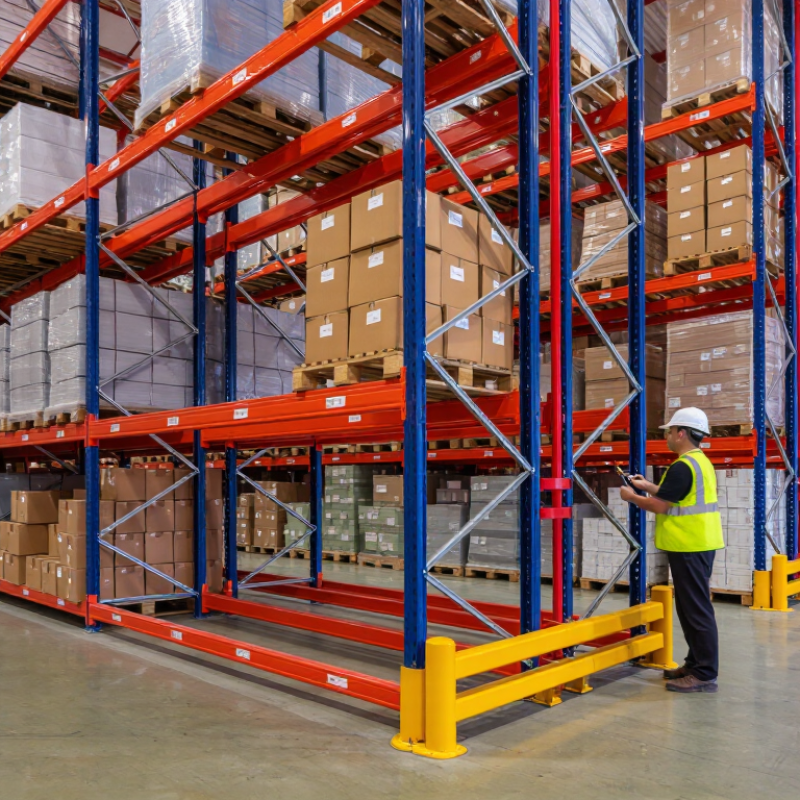
How to Choose Heavy-Duty Pallet Racks?

Choosing Heavy-Duty Pallet Racks starts with the load, not the catalog photo. What will each pallet weigh, including its packaging? How high will it sit? Will forklifts approach from one side or both? These details shape beam capacity, frame height, aisle width, and the protection needed around uprights. Measure the actual load. A tidy drawing can hide a messy warehouse.

The Material Handling Industry’s 2024 Annual Industry Report found that 55% of surveyed respondents planned to increase investment in supply-chain technology. That wider shift makes adaptable storage worth considering, but automation cannot compensate for an unsuitable rack design. The Rack Manufacturers Institute’s ANSI MH16.1 specification provides engineering requirements for industrial steel storage racks; buyers should also request documentation for the proposed configuration and its rated capacities. Check slab conditions, pallet dimensions, load distribution, and future changes with a qualified rack designer.

Warehouse-planning author David Mulcahy offers a useful perspective on the operational side. A practical paraphrase of his warehouse-design guidance is: “Choose storage around the work your operation actually performs.” This is not a verbatim quotation. It captures an important point: a rack must suit the real flow of goods, equipment, and people—not just a theoretical maximum load.

Look closely at the details. Are beam connectors secure? Are upright guards needed near busy turns? Can staff inspect damage without moving half the aisle? There is no perfect layout. Even careful plans need review after operations change. Choose Heavy-Duty Pallet Racks with documented capacity, compatible components, and a clear inspection plan. A stronger-looking frame alone is not proof of a safer system.

How to Choose Heavy-Duty Pallet Racks?

Define Load Requirements and Pallet Dimensions

Heavy-duty pallet racks should be sized around the loads you actually store, not a rough average. Record the heaviest fully loaded pallet, including its own weight, and note whether products sit evenly or concentrate weight near the edges. ISO 6780 specifies six principal pallet footprints, including 1,219 × 1,016 mm (48 × 40 in.) and 1,200 × 800 mm. A familiar footprint is not a guarantee of fit: measure the pallet’s real width, depth, and overhang. This sounds obvious, yet damaged or non-standard pallets can change clearances.

Use those measurements to set beam spacing and aisle clearances, then verify the rack’s rated capacity for the intended load arrangement. The Rack Manufacturers Institute’s ANSI MH16.1 design standard addresses steel storage rack design; OSHA’s 29 CFR 1910.176(b) requires stored materials to remain stable and secure. Do not treat a rack’s total bay capacity as permission to overload one beam level. If loads vary, size for the heaviest credible case and have a qualified rack designer check the configuration. I’d still remeasure after a product change; specifications drift.

Tips: Weigh a loaded pallet, measure its widest point, and record the load distribution. Keep those figures with the rack layout, and flag any overhang before ordering.

How to Choose Heavy-Duty Pallet Racks: Define Load Requirements and Pallet Dimensions

These planning examples pair common pallet footprints with illustrative total loaded-pallet weights; they are not rack capacity ratings. Confirm the actual pallet dimensions and weight, including the pallet itself. Calculate the beam-level load from the number of pallets stored, then verify beam, frame, floor, and anchorage capacities with a qualified rack supplier or engineer.

Assess Warehouse Layout and Material-Handling Equipment

Before choosing heavy-duty pallet racks, map the warehouse as it operates, not only as shown on a drawing. Measure clear height, aisle widths, column locations, doorways, sprinklers, and floor changes. Note where pallets wait during busy shifts. A rack plan that ignores a protruding beam or staging corner can reduce usable space and create awkward turns. Small details matter.

Match rack dimensions and aisle configuration to the handling equipment. Record the forklift’s turning radius, load length, mast height, and required operating aisle from its specification sheet. Verify these figures with a real loaded maneuver where possible. Check lift height against the highest beam and ceiling obstructions. If reach trucks, counterbalance forklifts, and pallet jacks share routes, plan for their widest needs, not the neatest machine on paper. This may cost capacity. Still, tighter aisles are not automatically better.

Tips: Mark proposed rack rows and travel paths on the floor with tape. Run a normal pallet through the route, including a turn and placement at height. Watch for blind corners, staging congestion, and pedestrian crossings. Recheck measurements after equipment changes; warehouse plans age quickly.

Compare Rack Types and Structural Features

Choosing heavy-duty pallet racks starts with the way pallets move through your building. Selective racks provide direct access to every pallet, which suits mixed inventory and frequent picking. Double-deep racks store more pallets in the same aisle space, but need compatible reach trucks. Drive-in racks increase storage density for uniform loads, though forklifts enter the rack lanes. Pallet-flow systems use gravity rollers for first-in, first-out rotation. They can be efficient, but require careful upkeep.

Tips: Check pallet dimensions, loaded weight, and forklift turning space. Ask for engineered capacity ratings, not estimates. Leave room for damaged pallets and imperfect loading.

Compare structural features, too. Roll-formed frames are often lighter and use interlocking components; structural-steel frames typically use heavier sections and bolted connections. Neither is automatically right for every site. Inspect upright thickness, bracing, beam connectors, base plates, and anchoring details. A beam may look sturdy yet still be unsuitable for a concentrated load. Confirm the floor can support rack and inventory loads, and have a qualified rack professional review the layout. One detail is easy to miss: future changes in pallet size can affect clearances and rated capacity. Recheck the design when inventory or equipment changes.

Verify Capacity Ratings, Safety Standards, and Installation Needs

Choosing heavy-duty pallet racks starts with matching rated capacity to the loads you actually store. Check the weight of each pallet, then confirm the beam rating for the intended shelf span and load placement. Upright frames also have limits, especially when several loaded levels are installed. Ratings often assume evenly distributed loads; a dense drum or machine part concentrated in one spot can change the risk. Small details matter.

Verify that the rack design and installation meet applicable safety standards and local building requirements. Seismic conditions, sprinkler clearance, aisle width, and floor condition can affect the layout. Ask for load tables and installation instructions for the exact configuration, not a similar-looking model. Anchors must suit the concrete slab, and frames should be plumb before loading. I have seen plans overlook uneven floors; correcting that after assembly can take time. Have a qualified rack professional review unusual loads or site constraints, and keep capacity labels visible to operators.

Tips: Measure pallets and clearances on site. Photograph floor cracks and overhead obstructions. Keep heavy loads low, and replace damaged beams only with compatible parts. Don’t guess.

Plan for Future Expansion, Inspection, and Maintenance

A heavy-duty pallet rack should fit today’s inventory without blocking tomorrow’s growth. Leave space for additional bays, wider turning areas, or a future change in pallet size. Measure actual loads, including pallets and packaging, rather than relying on estimates. A small mismatch can affect beam selection and safe capacity. Plan carefully.

Map the layout before installation. Mark aisle widths, columns, doors, sprinklers, and equipment routes on a scaled floor plan. Confirm that the floor can support the planned loads with a qualified structural professional. Keep load-rating information visible, and make sure operators know not to exceed it. Growth plans should also account for changing product weights, not just more pallet positions.

Inspection and maintenance need room in the schedule. Train staff to look for bent uprights, cracked welds, loose anchors, and damaged beam connectors. Record findings and restrict access to damaged areas until they are assessed and repaired. Set a regular inspection frequency based on rack use and site conditions; busy forklift routes may need closer attention. Keep replacement parts and repair records organized. It is easy to postpone checks during a busy shift, but that delay can hide worsening damage. Walk the aisles with a checklist, and note small impacts before they become expensive problems.

How to Choose Heavy-Duty Pallet Racks? — Plan for Future Expansion, Inspection, and Maintenance
Planning Dimension Information to Confirm Practical Planning Guidance
Pallet and load profile Pallet dimensions, loaded weight, load height, overhang, and load stability Use actual maximum loaded weights and pallet dimensions when specifying beam lengths and clearances. Include unusual or non-uniform loads in the design review.
Required rack capacity Load per pallet, pallets per beam level, number of levels, and total bay configuration Have a qualified rack designer verify beam, upright-frame, connection, and overall system capacities for the proposed configuration. Do not infer capacity from appearance or component size.
Future expansion Expected inventory growth, additional pallet positions, and possible changes in load weight or dimensions Forecast growth over the planning period and identify space for future rows or bays. Treat any capacity reserve as a planning allowance—not permission to exceed posted rack limits.
Warehouse layout and clearances Aisle widths, lift-truck turning needs, sprinkler coverage, exits, columns, doors, and building services Lay out the system around the equipment and building constraints. Keep required exits, fire-protection equipment, and access routes unobstructed; confirm applicable local requirements before installation.
Floor and anchorage Slab condition, floor levelness, concrete properties, anchor locations, and site-specific seismic conditions Confirm that the floor and anchorage suit the rack design and site conditions. Resolve cracks, unevenness, or other concerns with appropriate building or engineering professionals before installation.
Inspection plan Assigned inspectors, inspection frequency, reporting method, and escalation process Set a documented inspection schedule based on operating conditions and applicable requirements. Train staff to report visible damage promptly, and arrange a competent assessment when damage or a safety concern is found.
Damage response Criteria for isolating affected areas, unloading bays, repair approval, and return to service Create a clear process for restricting access to potentially unsafe areas and obtaining qualified evaluation. Replace or repair components only using an approved method; do not straighten or modify damaged members without authorization.
Routine maintenance Upright protection, anchors, beam connectors and locks, floor condition, and housekeeping Include these items in routine checks and keep aisles clear. Maintain installed safety devices and address loose, missing, or damaged parts through an approved maintenance procedure.
Load information and staff training Approved rack configuration, maximum permitted loads, safe loading practices, and change-control process Keep capacity information visible and consistent with the approved design. Train operators not to exceed posted limits, and obtain a design review before changing beam levels, components, or the rack layout.
Expansion compatibility Future bay additions, replacement components, connection compatibility, and revised layout drawings Keep approved drawings and component details on file. Before adding bays or mixing components, verify compatibility and have the revised configuration checked for capacity and stability.
Top