China Top Automobile Parts Manufacturers and Suppliers?
China’s automobile industry has become a major sourcing base for global vehicle programs. The China Association of Automobile Manufacturers reported 31.28 million vehicles produced and 31.44 million sold in 2024. New-energy vehicles represented more than 12.8 million sales, reshaping demand for batteries, electric motors, thermal systems, sensors, and software-related components. The numbers are large. The details matter.
This guide examines China’s top Automobile Parts manufacturers and suppliers through a practical purchasing lens. It considers production capacity, IATF 16949 certification, engineering support, export experience, quality control, and after-sales responsiveness. McKinsey’s automotive research shows that electrification, connectivity, and advanced electronics are moving value toward software and complex components. Therefore, the largest supplier is not always the safest choice. A smaller factory may provide stronger customization, clearer communication, or better batch traceability.
Gary Silberg, KPMG’s Global Automotive Leader, observed, “The automotive industry is becoming a technology industry.” His statement also applies to parts sourcing. A stamped bracket may look simple, yet its material tolerance, corrosion resistance, and inspection records can determine long-term reliability. Supplier evaluation should include factory audits, sample testing, PPAP documentation, and transparent production evidence. China Customs data also shows the country remains a significant automotive export hub, but export scale alone cannot prove consistent quality.
This overview uses public industry data and supplier-focused criteria. Some market figures differ between reporting agencies. That limitation deserves attention. A careful buyer should verify current certifications, capacity, tooling ownership, and delivery performance directly before signing a contract.
Overview of China’s Automobile Parts Manufacturing Industry
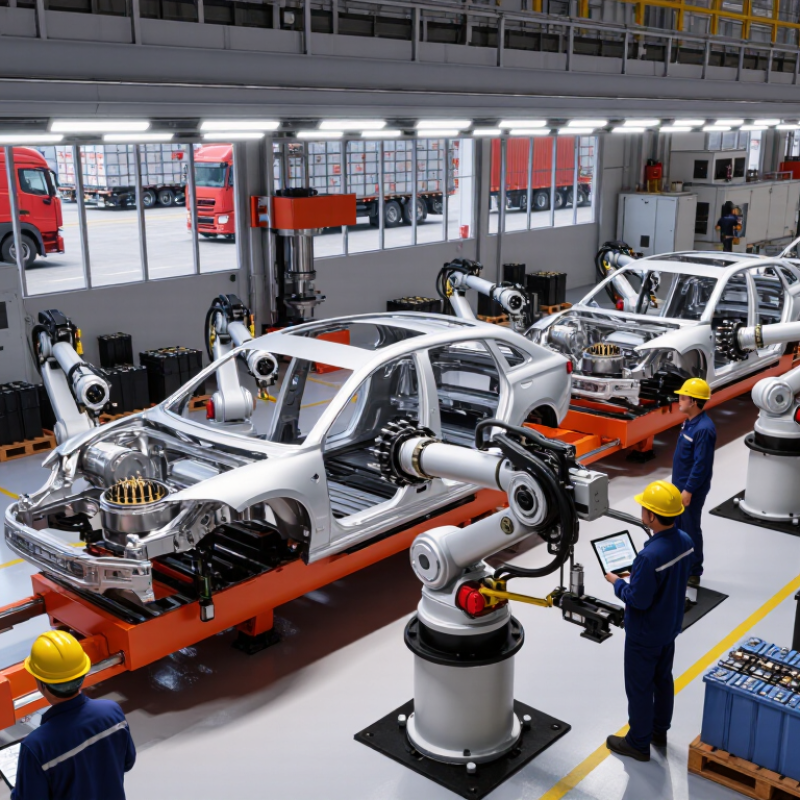
China’s automobile parts manufacturing industry has expanded with the country’s vehicle market. According to the China Association of Automobile Manufacturers, China produced 31.28 million vehicles and sold 31.44 million in 2024. This large production base supports demand for braking systems, steering parts, thermal management units, electronic controls, and interior components.
The industry is changing quickly. The International Energy Agency reported that electric cars exceeded 40% of new-car sales in China during 2024. This shift increases demand for battery housings, power electronics, lightweight structures, and advanced cooling systems. Many factories now use automated inspection cameras, digital production records, and robotic assembly cells. Details matter. A small connector defect can stop an entire vehicle line.
Yet the sector is not perfectly balanced. Large manufacturers often provide strong testing capacity, while smaller suppliers may struggle with software validation, international certification, or stable material sourcing. That gap deserves more attention. The 2024 China Automotive Industry Development Report also highlights pressure from price competition and faster technology cycles. Suppliers therefore need reliable traceability, process discipline, and engineers who understand both mechanical design and electronic systems. Production volume helps, but it does not replace verified quality.
Major Categories of Chinese Automotive Parts Suppliers
China’s automotive parts supply base covers several practical categories. Powertrain suppliers produce engine components, transmission parts, filters, gaskets, and fuel-system assemblies. Many factories support drawing-based production, making samples before larger orders. Fit matters.
Chassis suppliers focus on braking, steering, suspension, wheel hubs, and fasteners. Their products require accurate dimensions, stable materials, and repeated fatigue testing. Electrical suppliers manufacture wiring harnesses, sensors, lighting modules, switches, and control units. EV-focused manufacturers also provide battery housings, thermal-management parts, charging components, and motor assemblies. Documentation matters.
Body and interior suppliers produce panels, mirrors, seats, dashboards, trim pieces, rubber seals, and molded plastics. Some factories serve replacement markets, while others develop parts for vehicle manufacturers. Buyers should review inspection records, material certificates, production capacity, and traceability before placing orders. Factory visits can reveal details that photographs hide, such as poor storage or inconsistent labeling. That gap matters.
A reliable supplier should explain tolerances clearly and respond with measurable corrective actions. Yet no category is automatically dependable. Small defects may appear after shipment, especially when specifications remain vague. Independent sampling, pre-shipment inspection, and controlled trial orders reduce this risk. Experienced buyers also compare tooling ownership, packaging quality, lead times, and communication speed. Chinese suppliers can be highly capable, but careful verification remains necessary.
Leading Automobile Parts Manufacturers in China
Leading Automobile Parts Manufacturers in China
China’s leading automobile parts manufacturers support a vast and changing vehicle market. The China Association of Automobile Manufacturers reported 31.28 million vehicles produced in 2024. New-energy vehicle production reached 12.89 million units. These figures create strong demand for batteries, thermal systems, braking parts, sensors, interiors, and precision metal components.
Reliable manufacturers usually combine IATF 16949 certification, automated inspection, and complete production traceability. In practical factory audits, buyers should examine incoming-material records, dimensional reports, test samples, and corrective-action history. Production clusters in eastern and southern China often provide faster access to tooling, electronics, logistics, and engineering services. However, capability can vary between factories. A polished showroom proves little. The supplier’s process evidence matters more.
Tips: Request a recent capacity plan, sample approval record, and failure-rate data. Confirm whether testing is performed internally or outsourced. Ask for a small pilot order before long-term cooperation. Cost still matters, but an unusually low quotation may conceal weaker materials, limited inspection, or unstable staffing. China’s scale is impressive, yet quality consistency requires active supplier management. Even experienced buyers can overlook communication gaps, especially when drawings change quickly. Use clear bilingual specifications, signed revisions, and measurable acceptance criteria.
How to Evaluate Chinese Auto Parts Suppliers
How to Evaluate Chinese Auto Parts Suppliers
Evaluating Chinese auto parts suppliers requires more than checking price lists. Start with the supplier’s legal registration, production scope, and export experience. Ask for current quality certificates and verify their issuing organizations. A professional supplier should explain material grades, tolerance limits, and inspection methods clearly. Vague answers deserve attention.
Request product samples before placing a large order. Compare dimensions with your approved drawings, especially holes, threads, seals, and mounting points. Review test reports for strength, heat resistance, corrosion protection, and service life. The report should match the exact part number and production material. Do not rely on photographs alone.
Visit the factory when possible, or arrange a live video inspection. Look for clean storage areas, calibrated measuring tools, and visible process records. Ask how defective parts are separated and recorded. Traceability matters. Each batch should connect to raw materials, operators, and inspection results. A polished factory tour can still hide weak controls. Small details often reveal more.
Discuss packaging, labeling, delivery schedules, warranty handling, and replacement procedures in writing. Confirm that parts meet the destination market’s safety and documentation requirements. Use a controlled trial order with clear acceptance criteria. Cheap parts may create expensive delays. Also, supplier evaluation is not permanent; staffing, equipment, and subcontracting can change after approval. Recheck performance regularly.
China Top Automobile Parts Manufacturers and Suppliers: How to Evaluate Chinese Auto Parts Suppliers
Use this weighted evaluation framework to compare suppliers without relying only on price. The criteria reflect common automotive procurement requirements, including quality systems, production capability, compliance, delivery performance, technical support, and total cost.