What Is a Thermal Receipt Printer?
A Thermal Receipt Printer produces text and simple graphics by applying heat to specially coated paper. Inside the printer, a heated print head presses against the paper and darkens selected areas to form each line. No ink. No ribbon. The result is a compact device commonly found at checkout counters, cafés, ticket desks, and self-service kiosks. Its quiet operation and straightforward loading make it practical in busy spaces where receipts need to print quickly.
That simplicity has trade-offs. Receipts require compatible thermal paper, and print can fade with time, heat, or strong light. A paper roll left beside a sunny window may not stay readable for long. Print speed, connection options, paper width, and supported features also vary by model, so buyers should check the specifications rather than assume every unit works the same way. Small details matter.
This guide explains how thermal printing works, identifies the main printer components, and compares common uses and limitations. It also covers practical factors such as paper handling, connectivity, maintenance, and choosing a model for a particular checkout setup. The technology is easy to overlook because the machine often sits quietly beside a register. Still, understanding its strengths—and its dependence on suitable paper—helps businesses and everyday users make more informed choices.
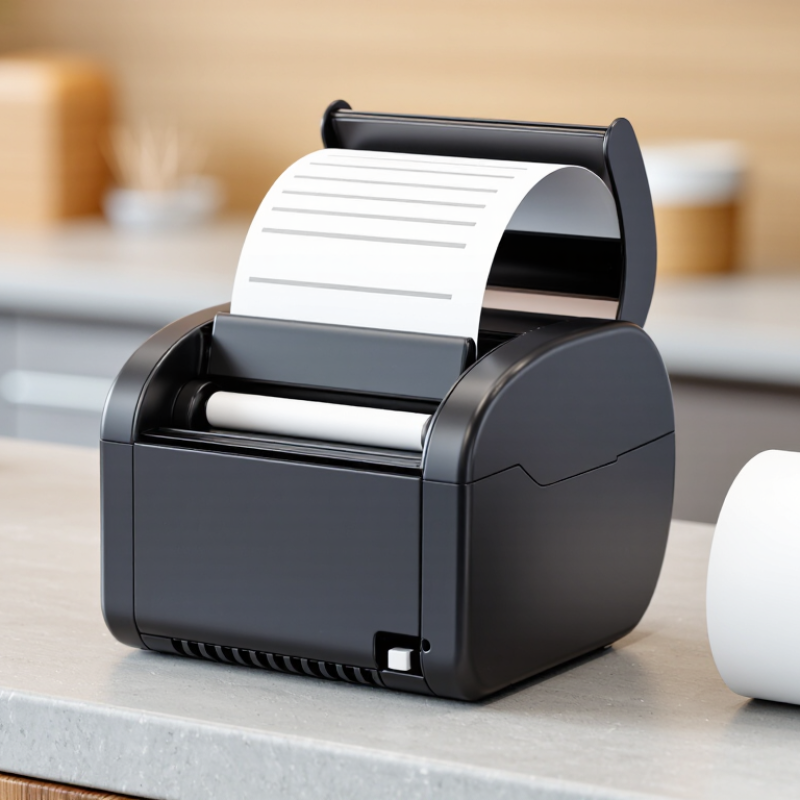
Definition and Purpose of a Thermal Receipt Printer
What Is a Thermal Receipt Printer?
Definition and Purpose of a Thermal Receipt Printer
A thermal receipt printer creates text and simple graphics by applying heat to specially coated paper. Inside, a heated printhead darkens tiny areas to form letters, prices, and symbols. No ink cartridge is needed. That keeps routine operation fairly simple.
Its purpose is to produce transaction records quickly at checkout counters, cafés, ticket desks, and service stations. A cashier can print a narrow receipt within seconds, often with little noise. The paper roll is easy to replace, though loading it crooked can waste a few inches. Small detail, real annoyance.
Thermal printing works well when speed and legibility matter more than long-term image stability. Receipts may fade after prolonged exposure to sunlight, heat, or friction, so they are not ideal archival records. Businesses should choose paper suited to their environment and keep important transaction data in reliable digital records too. That balance is easy to overlook. Printers also vary in paper width, resolution, and connection options, so the model needs to fit the register and receipt layout.
How Thermal Printing Produces Text and Images
A thermal receipt printer creates text by heating a special, chemically coated paper. Inside the printer, a printhead contains many tiny heating elements arranged in a line. As the paper moves beneath them, selected elements warm specific spots. Those spots darken, forming letters, numbers, and symbols. No ink is needed.
The pattern is built dot by dot. A printed “8,” for example, appears when the printer heats a carefully chosen group of small points. Images work the same way: the printer converts artwork into rows of dots, then heats each row in sequence. Fine details can look grainy, especially in small logos or shaded graphics. That is a limitation worth noticing.
Print quality depends on more than the image file. Paper coating, printhead condition, and heat settings all affect contrast. A dusty or worn printhead may leave pale stripes across text. Excessive heat can make marks too dark or speed up wear. The result is simple, but not magic. Even a clean-looking receipt is a physical pattern formed through controlled heat.
Key Components of a Thermal Receipt Printer
What Is a Thermal Receipt Printer?
Key Components of a Thermal Receipt Printer
A thermal receipt printer creates text and graphics by applying controlled heat to coated paper. Its central component is the thermal printhead, a row of tiny heating elements that darken selected points. The controller converts sales data into a dot pattern and times each element. No ink cartridge is needed. The mechanism looks simple, but heat consistency matters; faint streaks can signal a dirty or worn printhead.
A rubber platen roller presses paper against the head and advances it evenly. Sensors detect paper presence, cover position, or a near-empty roll, while the power supply supports consistent heating. Some models add an automatic cutter. These parts must work together: a slipping roller can distort print, even when the head is clean. Fortune Business Insights’ 2024 thermal printing market report estimated the global market at USD 4.36 billion in 2023 and forecast growth to USD 7.98 billion by 2032. Market growth does not mean every design suits every counter.
Tips: Keep the printhead clean with an appropriate, lint-free cleaning method. Check that the roller turns smoothly and the paper feeds straight. If receipts fade, inspect the paper and temperature settings too; replacing parts immediately is not always the answer.
Typical Uses and Practical Limitations
What Is a Thermal Receipt Printer? Typical Uses and Practical Limitations
A thermal receipt printer creates text and simple graphics by heating coated paper, so it needs no ink cartridge. At a busy checkout, it can print a receipt in seconds, with little noise and few moving parts. Kitchens use similar printers for order tickets; clinics and service desks print queue slips. Direct-thermal models also produce many shipping and return labels. The U.S. Census Bureau’s Q4 2024 retail e-commerce report put online sales at 16.1% of total U.S. retail sales, underscoring the steady need for order paperwork and labels.
Speed is useful. Durability is less impressive. Heat, sunlight, friction, and time can fade thermal prints; a receipt left on a warm dashboard may become hard to read. Printing is usually monochrome, and coated rolls must be replaced. That recurring supply cost is easy to overlook. The National Retail Federation’s 2024 Consumer Returns in Retail report estimated $890 billion in returns, or 16.9% of annual retail sales, highlighting how often businesses handle return paperwork. Thermal printers can produce those slips quickly, but they are not ideal for records that must stay legible for years. For important documents, staff may need another storage method. I would not treat every printed receipt as a reliable archive.


