What Is WPC Exterior Panel and What Is It Used For?

Wood-plastic composites are moving from niche landscaping products into contemporary building envelopes. Grand View Research estimates that the global wood-plastic composite market reached approximately USD 7.63 billion in 2023. Its report projects continued growth through 2030, supported by demand for durable, low-maintenance outdoor materials. These figures cover several applications, not exterior panels alone. That distinction matters.

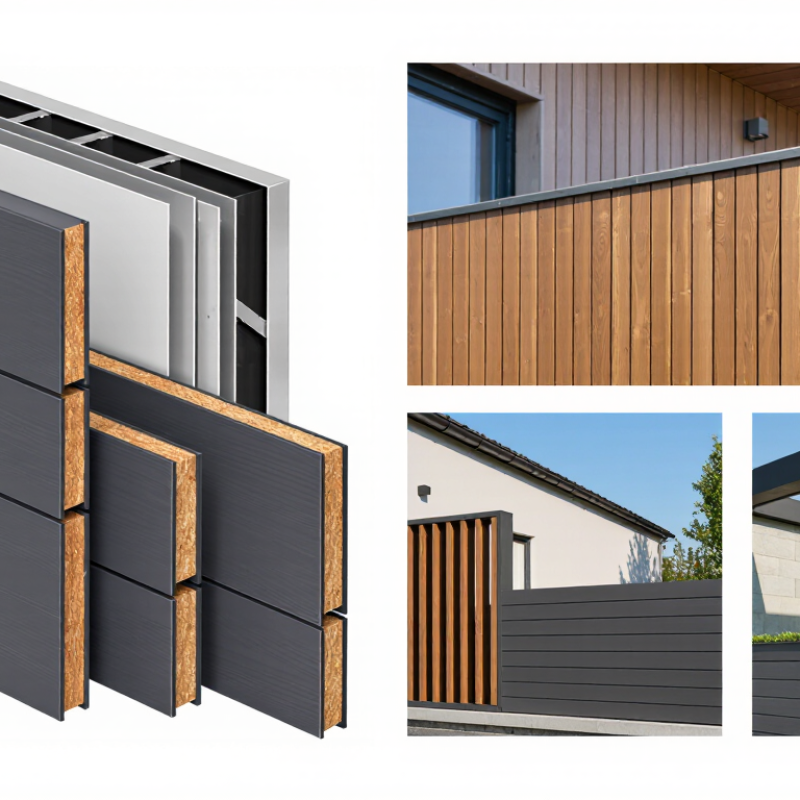
A Wpc Exterior Panel combines wood fiber, polymer resin, pigments, and performance additives. Manufacturers press or extrude this mixture into boards, sheets, or profiled cladding. The result can resemble painted timber while resisting common problems such as cracking, insect damage, and repeated moisture exposure. In practical projects, installers may use these panels for rainscreen façades, balcony privacy screens, garden walls, soffits, and decorative exterior partitions. A dark panel beside a ventilated cavity can create a clean façade with fewer repainting cycles.

However, it is not magic. Water resistance does not mean complete waterproofing. Panel movement, fixing gaps, ventilation, and edge sealing still require careful design. ASTM D7031 provides guidance for evaluating wood-plastic composite products, while EN 15534 addresses relevant composite characteristics in European applications. Fire classification, ultraviolet stability, slip performance, and local weather conditions should also be checked before specification. Manufacturer test reports are useful, but independent verification is better.

Industry forecasts can differ because researchers define “WPC” differently. Therefore, buyers should examine product composition, warranty limits, installation instructions, and test methods. This article explains what a Wpc Exterior Panel is, where it performs well, and where its apparent advantages may need a more cautious interpretation.

What Is WPC Exterior Panel and What Is It Used For?

What Is a WPC Exterior Panel?

A WPC exterior panel is a building panel made from wood fibers and thermoplastic materials. The blend creates a surface with a natural wood appearance and improved resistance to outdoor moisture. Many panels have a grooved or textured face, which can resemble timber from several meters away. Their color may slowly change under sunlight, so samples should be tested outdoors before large installations.

WPC exterior panels are commonly used for façade cladding, balcony walls, garden screens, porch ceilings, and decorative fencing. They are not usually structural elements. Instead, installers attach them to a stable frame with screws, clips, or suitable profiles. A small gap at each joint allows expansion during hot weather. Proper drainage behind the panels also helps prevent trapped moisture. Cutting one panel on site often reveals why clean tools matter: rough edges can collect dirt and water.

Performance depends on the product formula, panel thickness, installation method, and local climate. WPC is not maintenance-free. Dust, algae, and surface stains may still appear in shaded areas. Regular washing with mild soap is practical, while harsh chemicals can damage the finish. Fire performance should be checked through verified test documents, especially for multi-storey buildings. In my experience, the most attractive installation can still fail when ventilation is ignored. The material looks simple. The details are not.

What Is a WPC Exterior Panel and What Is It Used For?

Representative material composition of a wood-plastic composite exterior panel by mass

WPC exterior panels are manufactured from wood fiber or wood flour blended with a thermoplastic polymer and performance additives. The wood component provides a natural appearance and stiffness, while the polymer helps improve moisture resistance and dimensional stability. These panels are commonly used for exterior wall cladding, soffits, balcony details, decorative façades, and other non-structural applications. Actual formulations vary according to the intended use and manufacturer specifications.

How Are WPC Exterior Panels Made?

What Is WPC Exterior Panel and What Is It Used For?

WPC exterior panels combine wood fiber, thermoplastic resin, and performance additives. They commonly cover façades, balcony walls, garden structures, and sheltered outdoor ceilings. The wood component adds texture, while the polymer improves moisture resistance and dimensional stability.

Grand View Research estimated the global wood-plastic composites market at about USD 7.5 billion in 2022. Its report also projected continued growth through 2030, driven partly by construction and exterior applications.

How Are WPC Exterior Panels Made?

Manufacturing starts with screened wood flour or fibers. Producers dry the material carefully because trapped moisture can create bubbles and weak surfaces. The fibers are then blended with polyethylene, polypropylene, or another compatible thermoplastic. Small amounts of pigments, lubricants, stabilizers, and coupling agents improve processing and weather performance.

The mixture enters a heated extruder. Rotating screws melt the polymer and distribute the wood particles evenly. A shaped die forms the panel profile. Cooling calibrators then control thickness and alignment.

Rollers may emboss a grain pattern before the panel is cut to length. Some panels receive co-extruded protective layers, but this adds cost and does not remove every maintenance concern.

Quality testing can include water absorption, flexural strength, thermal expansion, and accelerated weathering. ASTM-based methods are often used for comparison, although test results depend on formulation and panel design.

The Freedonia Group’s industry analysis identifies construction as a major outlet for wood-plastic composites.

In practice, poor drying or uneven fiber distribution can still cause warping. That detail is easy to overlook.

What Are the Main Features of WPC Exterior Panels?

WPC exterior panels combine wood fibers with thermoplastics to create a durable cladding material. They are commonly used on façades, balconies, garden walls, eaves, and outdoor privacy screens. Their main appeal is a warm wood-like appearance without the regular sealing required by untreated timber.

Moisture resistance is a key feature. The panels absorb less water than ordinary wood, helping reduce swelling, cracking, and decay. They also tolerate sunlight, wind, and seasonal temperature changes when correctly manufactured and installed. However, colors may fade gradually under strong ultraviolet exposure. That detail is often overlooked.

Installation requires a stable, level support frame and suitable outdoor fasteners. Small expansion gaps are necessary because panels can move with heat. Ventilation behind the cladding helps release trapped moisture and protects the wall structure.

WPC panels are also easy to cut and clean, usually needing only mild soap and water. They resist insects better than natural wood, but they are not maintenance-free. Surface scratches can remain visible, especially on darker finishes.

Fire performance, load limits, and temperature ratings vary between products, so verified technical documents should guide material selection. A beautiful panel can still fail when drainage is poor.

Where Are WPC Exterior Panels Used?

WPC exterior panels are commonly used for building facades, balcony walls, garden fences, and outdoor privacy screens. They combine wood fibers with polymer, creating a surface that looks warmer than plain plastic. Many panels resist moisture, insects, and daily weather exposure. They also need less repainting than traditional timber. Still, they are not a perfect substitute for every material. Heat can cause expansion. Color may fade over time.

Where are WPC exterior panels used? Homeowners often install them around patios, poolside walls, entrance porches, and roofed terraces. Architects also specify them for office entrances, restaurant exteriors, and apartment balcony screens. Their textured finish can hide minor wall marks and create clear visual zones. In rainy areas, panels work best with a ventilated backing system and proper drainage. Direct contact with standing water should be avoided. For very sunny elevations, I would choose a tested, UV-resistant product and inspect sample colors outdoors. Indoor samples can mislead.

Tips: Leave the recommended expansion gap. Use corrosion-resistant fasteners. Check the wall for moisture before installation. Keep panels away from blocked drains and sprinklers. A darker surface may become hot under strong sunlight. Small installation details matter more than many buyers expect.

What Is WPC Exterior Panel and What Is It Used For? - Where Are WPC Exterior Panels Used?

Data Dimension Typical Information Practical Meaning Common Exterior Uses
Material composition A composite made from wood fiber or wood flour, thermoplastic resin, and performance additives. Combines a wood-like appearance with the moisture resistance and processability of plastic. Facade cladding, decorative wall panels, soffits, privacy screens, and outdoor partitions.
Typical panel profile Flat, grooved, slatted, hollow, or co-extruded boards; profile dimensions vary by product design. Different profiles provide different visual effects, weight, ventilation, and installation methods. Modern facade screens, feature walls, balcony accents, and ventilated decorative facades.
Typical thickness Common exterior products are approximately 10–30 mm thick, depending on the profile and structural requirements. Thicker or reinforced profiles generally provide greater rigidity and impact resistance. Exterior wall decoration, screen systems, balcony cladding, and low-load architectural features.
Moisture performance Generally more moisture-resistant than untreated natural wood, but not automatically waterproof in every installation. Correct drainage, ventilation, sealing, and edge protection remain important. Covered outdoor walls, garden structures, balconies, patios, and weather-exposed decorative areas.
Weather and UV resistance Outdoor-grade panels are formulated to withstand sunlight, rain, and temperature changes; color variation can still occur over time. Select products specifically rated for exterior exposure and follow the installation guidelines. Building exteriors, entrance features, garden walls, terrace accents, and outdoor commercial spaces.
Maintenance needs Usually requires routine cleaning with water and mild detergent; repainting is often unnecessary for colored or capped products. Lower routine maintenance than many painted wood surfaces, although inspections are still necessary. Low-maintenance facades, hospitality buildings, residential balconies, and landscape structures.
Thermal movement Like other plastic-containing materials, WPC panels expand and contract with temperature changes. Expansion gaps, suitable fasteners, and correct subframe spacing are required for durable installation. Long exterior runs, sunny facades, rooftop terraces, and exposed balcony applications.
Installation method Commonly installed over a prepared substructure using clips, screws, brackets, or compatible concealed-fixing systems. A level, ventilated, and adequately supported base helps prevent warping and uneven joints. Rainscreen-style decorative walls, soffits, screens, and exterior feature panels.
Appearance options Wood-grain textures, solid colors, brushed finishes, grooved surfaces, and multiple board orientations. Supports both natural-looking designs and contemporary architectural styles. Feature walls, entrance surrounds, retail exteriors, restaurant terraces, and residential elevations.
Fire performance Fire behavior depends on the formulation, profile, additives, and tested system; WPC should not be assumed to be fireproof. Check local building codes and certified fire-test documentation before using panels on regulated facades. Suitable only where the selected panel and complete wall assembly meet project requirements.
Environmental considerations May incorporate wood by-products and recycled polymers, depending on the product formulation and manufacturing process. Environmental benefits should be evaluated using verified product information and end-of-life options. Projects seeking a wood-inspired exterior finish with potentially reduced use of solid timber.
Typical limitations May be heavier than thin plastic boards, can experience thermal expansion, and may require more careful detailing than interior panels. Product selection must consider wind exposure, span, support spacing, drainage, UV conditions, and local regulations. Best suited to decorative or properly engineered cladding applications rather than unsupported structural use.

How Should WPC Exterior Panels Be Installed and Maintained?

WPC exterior panels combine wood fiber and polymers for façades, privacy screens, and sheltered outdoor walls. Their performance depends heavily on installation quality. Before fitting, inspect the wall for levelness, moisture, and structural soundness. A drained cavity behind the panels helps water escape and supports drying.

Use corrosion-resistant fasteners suited to the substrate. Predrill near panel ends to reduce splitting and stress. Leave expansion gaps exactly as specified in the technical sheet. Do not tightly butt the boards. Thermal movement differs between products, so one universal gap is unsafe.

ASTM D7031 highlights weathering, fastener holding, and dimensional stability as important evaluation factors for wood-plastic composites. Local wind, fire, and façade requirements also need checking.

Keep drainage paths open. Clean panels with water, a soft brush, and mild detergent. Avoid aggressive solvents and uncontrolled high-pressure washing. Inspect joints, clips, and corners at least once a year. Look for swelling, loose fasteners, staining, or trapped debris.

The USDA Forest Products Laboratory’s 2021 Wood Handbook notes that decay fungi generally require wood moisture above 20%; adjacent timber framing therefore deserves careful inspection after prolonged rain.

No installation is perfect. A small drainage mistake can create a large repair. When a panel moves unexpectedly, review ventilation and fixing pressure before replacing it.

Top