Top 10 High Resolution 3D Printing Companies Worldwide
High resolution 3d printing is changing how companies produce detailed prototypes, medical models, jewelry, and miniature components. These systems can reproduce fine textures, narrow channels, sharp edges, and complex internal forms. However, resolution alone does not prove industrial value. Material stability, dimensional accuracy, surface finish, software control, and post-processing also matter.
Terry Wohlers, a respected additive manufacturing consultant, describes the process clearly: “Additive manufacturing is a process of joining materials to make objects from 3D model data, usually layer upon layer.” His definition reminds us that precision begins with reliable digital data. It continues through calibration, material handling, and inspection. A small nozzle error can leave visible ridges across a model. A poorly cured resin can hide weaknesses beneath a smooth surface.
This guide examines ten leading high resolution 3d printing companies worldwide. The selection considers technical capabilities, application range, documented industry experience, and practical reliability. Some companies excel in microscopic detail. Others focus on production speed, engineering materials, or repeatable factory workflows. No provider is perfect. Marketing language can also make comparisons difficult. Specifications may vary between machines, materials, and test conditions.
That is why real performance deserves careful attention. Look beyond impressive sample parts. Ask how the company measures accuracy, manages failed prints, and supports customers after installation. The strongest suppliers combine innovation with disciplined quality control. They also acknowledge limitations, which is often a sign of professional maturity. This ranking offers a useful starting point, not a final verdict.
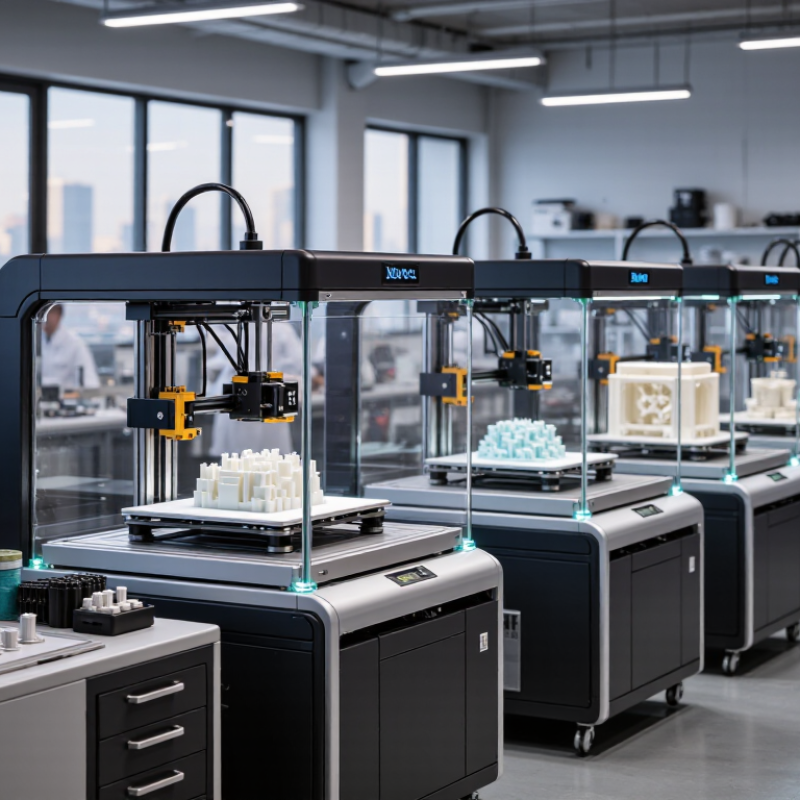
Definition and Scope of High-Resolution 3D Printing
Definition and Scope of High-Resolution 3D Printing
High-resolution 3D printing produces small features, fine edges, and controlled surface details. Its scope includes photopolymer, powder-bed, material-jetting, and specialized microfabrication processes. However, “high resolution” has no universal numerical threshold. ISO/ASTM 52900 defines additive manufacturing terms, but it does not declare one layer height as high resolution.
Resolution usually involves several measurements. Layer height may range from 10 to 100 microns, while in-plane feature size can vary significantly. Dimensional accuracy, repeatability, surface roughness, and minimum wall thickness also matter. A 25-micron layer does not guarantee a 25-micron finished feature. Shrinkage, curing behavior, thermal distortion, and post-processing can change the result. This distinction is important in dental models, microfluidic parts, jewelry patterns, and miniature engineering components.
Industry data shows why this field deserves careful definition. The 2024 Wohlers industry report valued the global additive manufacturing market at about 20 billion US dollars in 2023, with continued growth across production applications. Yet market reports often combine machine sales, materials, software, and services. They rarely isolate high-resolution printing. That gap creates uncertainty when comparing suppliers. I would not treat a smaller layer number as proof of superior performance. Test geometry, measurement equipment, and production conditions should be disclosed. The boundary remains fuzzy. A useful evaluation asks what detail survives after printing, cleaning, curing, and inspection.
Criteria for Ranking Global 3D Printing Companies
Top 10 High Resolution 3D Printing Companies Worldwide
Ranking global 3D printing companies requires more than comparing advertised layer thickness. Our criteria begin with measured resolution, dimensional accuracy, surface finish, and repeatability across long production runs. ISO/ASTM 52920:2023 supports evaluating industrial additive manufacturing processes through controlled quality systems and documented production steps. Real evidence matters more than showroom samples.
Market scale also shapes the ranking. The Wohlers Report 2024 valued the global additive manufacturing industry at approximately $20.0 billion in 2023, with 13.5% annual growth. Companies therefore receive credit for dependable throughput, material compatibility, machine uptime, and worldwide technical support. We examine validated applications, inspection records, service coverage, and customer case evidence. Claims without test conditions remain weak.
Resolution alone can mislead.
A strong evaluation also considers software control, thermal stability, post-processing precision, and operator training. Energy use, material waste, repair access, and regulatory documentation affect long-term value. Public information is uneven, so some scores rely on limited disclosures. That is an unavoidable weakness. Independent testing should carry greater weight than marketing language, yet testing methods are not always comparable. Our final ranking balances engineering performance, commercial reliability, research credibility, and practical results from demanding production environments.
Top 10 High Resolution 3D Printing Companies Worldwide
Criteria for Ranking Global 3D Printing Companies
This editorial ranking model evaluates high-resolution 3D printing providers using six practical criteria. Print resolution and dimensional accuracy receive the highest weights because they directly determine fine-feature quality and part consistency. Material capability, build volume, production scalability, and quality certifications complete the assessment.
Comparison of Technologies, Materials, and Printing Precision
High-resolution 3D printing companies worldwide differ most in technology, materials, and measurable precision. The leading ten typically use resin, powder-bed fusion, material jetting, or highly controlled extrusion.
Resin systems can reproduce fine dental textures and miniature mechanical features.
Powder-bed methods support strong nylon or metal parts with complex internal channels.
Material jetting offers smooth surfaces and multi-material detail.
Extrusion remains practical for larger prototypes, although visible layer lines may reduce accuracy.
Printing precision depends on more than the machine’s advertised layer height. Calibration, thermal stability, part orientation, support removal, and post-processing all influence the final result. In practical testing, a 25-micron layer setting may not produce a 25-micron feature.
Warping can appear near sharp corners. Small holes may also close after curing or sintering. Material shrinkage must be measured with test coupons before production. These details separate dependable suppliers from impressive specifications.
Tips:
Request dimensional samples, tolerance data, and material safety documents. Compare surface roughness, tensile strength, and repeatability under identical conditions. Ask how operators verify calibration and inspect finished parts. A lower price can hide longer finishing work. Precision is a process, not a number. No ranking stays perfect. Application requirements should guide the final choice.
Industries Served and Emerging Market Developments
Top 10 High Resolution 3D Printing Companies Worldwide
High-resolution 3D printing now supports medical, dental, aerospace, automotive, jewelry, and electronics industries. In dental laboratories, printers create aligner molds with fine edges and smooth surfaces. Medical teams use similar systems for surgical models and customized guides. Aerospace manufacturers value lightweight lattice structures and accurate internal channels. Automotive engineers print prototypes overnight, reducing delays between design changes and physical testing.
The strongest companies usually combine precise hardware, validated materials, software control, and technical support. A 25-micron layer can reveal small details, but accuracy also depends on calibration and post-processing.
Experienced users check dimensional reports, surface roughness, and repeatability across several production runs. Certification support matters greatly in healthcare and aviation. A fast machine is not always a reliable production machine.
Emerging markets are expanding beyond major industrial centers. Local factories in Southeast Asia, the Middle East, Latin America, and Africa are adopting compact systems for spare parts, education, and customized manufacturing. Distributed production can reduce shipping time and warehouse costs. However, maintenance skills, material availability, and process training remain uneven. Some market comparisons still focus too heavily on resolution figures. That approach needs reconsideration. Total operating cost, worker expertise, energy use, and real-world consistency often matter more.