What Is 3D Printing and What Are Its Applications?
3D printing is an additive manufacturing process that builds physical objects layer by layer from a digital model. Unlike cutting material from a solid block, it deposits or cures only what the design requires. A desktop printer may produce a small prototype in plastic, while industrial systems can form metal components for aircraft or medical devices. The process sounds simple. The decisions are not.
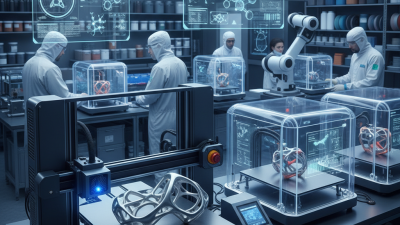
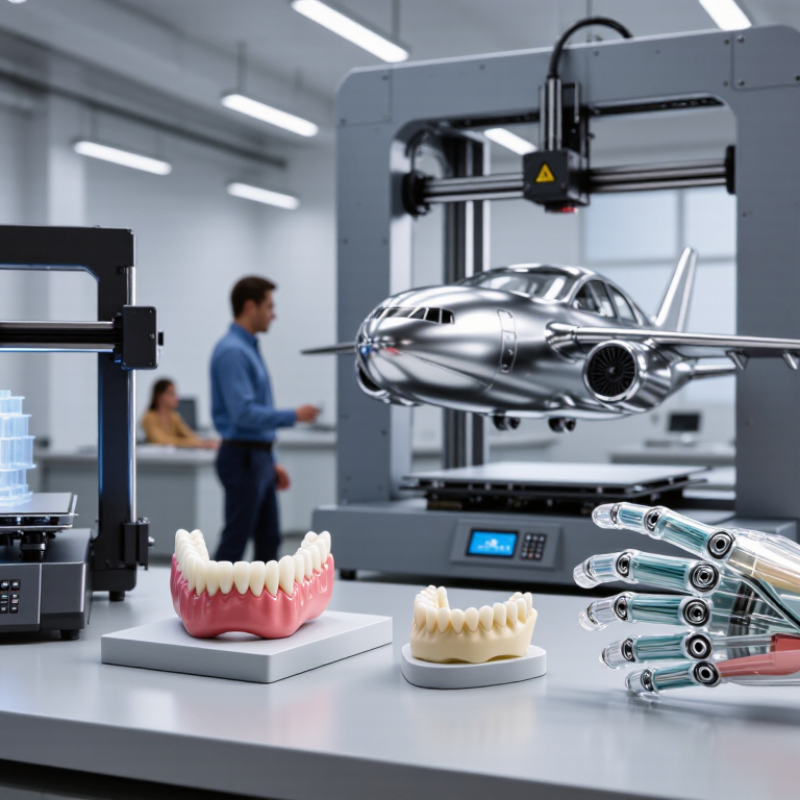
This guide examines 3d printing applications across healthcare, aerospace, automotive production, education, construction, and consumer design. In hospitals, carefully tested printed models can help surgeons study complex anatomy before an operation. Dental laboratories use digital scans to create aligners, crowns, and surgical guides. Engineers also print lightweight parts with internal structures that traditional manufacturing cannot easily produce. These examples show practical value, but performance depends on material choice, printer calibration, post-processing, and inspection.
Reliable results require more than attractive prototypes. Designers must consider strength, heat resistance, surface quality, production speed, cost, and regulatory requirements. Aerospace and medical products often need documented testing, traceable materials, and qualified manufacturing procedures. Safety comes first.
The technology still has weaknesses. Some printed parts crack along layer lines, warp during cooling, or require extensive finishing. I once viewed speed as its greatest advantage, but that judgment was incomplete; preparation and quality control can take longer than printing. Understanding these trade-offs makes the subject more useful. It also prevents exaggerated claims about a technology that remains powerful, but not universal.
What Is 3D Printing and How Does It Work?
3D printing, or additive manufacturing, builds objects layer by layer from a digital design. The process begins with a CAD model, which slicing software divides into thin cross-sections. A machine then deposits, cures, or fuses material along programmed paths. Each layer bonds with the previous one. Small errors can accumulate.
ISO/ASTM 52900 classifies additive manufacturing into seven process categories, including material extrusion, vat photopolymerization, and powder bed fusion. Material choice changes the result. Polymers suit lightweight prototypes, while metals support demanding industrial components. After printing, parts may require support removal, heat treatment, sanding, or surface inspection. The workflow is technical, not instant.
The 2024 Wohlers Report estimated that the global additive manufacturing industry reached 20.035 billion dollars in 2023, with 13.5% year-on-year growth. This expansion reflects practical uses in medical models, aerospace tooling, dental devices, customized fixtures, and small-batch production. Engineers can test a grip in hours instead of waiting weeks for conventional tooling. That advantage is real, but not universal. A printed part may look accurate while containing hidden porosity, weak layer adhesion, or dimensional drift. Quality depends on machine calibration, material storage, build orientation, and inspection. Published performance claims deserve careful checking. Personally, I would treat 3D printing as a controlled manufacturing method, not a shortcut that removes engineering judgment.
What Is 3D Printing and How Does It Work?
3D printing is an additive manufacturing process that creates a physical object by depositing or solidifying material layer by layer from a digital 3D model. Layer height affects surface smoothness, printing speed, and the level of detail that can be produced.
Values show representative layer heights in millimeters. Actual settings vary according to material, machine configuration, geometry, and desired surface quality.
Common Applications
3D printing is widely used for rapid prototypes, customized medical and dental models, educational models, tooling, architectural forms, aerospace components, automotive parts, and small-batch production. Finer layer heights generally support detailed visual models, while thicker layers can improve production speed for larger functional parts.
Main 3D Printing Technologies and Materials
What Is 3D Printing and What Are Its Applications?
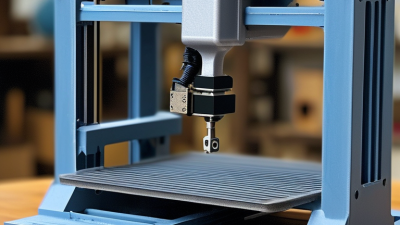
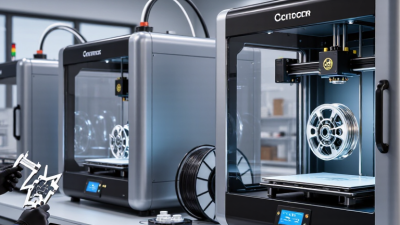
3D printing creates physical objects layer by layer from a digital model. The main technologies differ in how they form each layer. Fused deposition modeling melts plastic filament through a heated nozzle. It suits prototypes, classroom models, household parts, and simple mechanical fixtures. Common materials include polylactic acid, acrylonitrile butadiene styrene, nylon, and flexible thermoplastic elastomers. Each behaves differently under heat, pressure, and sunlight.
Stereolithography uses light to cure liquid resin into detailed shapes. It can produce smooth surfaces for dental models, jewelry patterns, and small enclosures. However, uncured resin requires careful handling and controlled ventilation. Selective laser sintering fuses powdered materials, often nylon, without needing traditional support structures. This helps create complex ducts, hinges, and lightweight lattice parts. Metal powder systems can produce strong engineering components, but they demand strict process control, inspection, and trained operators.
Material choice is rarely simple. A strong part may still crack along its layers. A beautiful surface may hide weak internal bonding. Designers should test printed samples under realistic loads, temperatures, and moisture levels. I have found that reducing print speed can improve consistency, but it may increase production time substantially. That trade-off is easy to ignore. 3D printing is powerful, yet it is not magic. Failed prints can reveal poor tolerances, unsuitable materials, or inaccurate assumptions in the original model.
The Step-by-Step Process of Creating a 3D-Printed Object
3D printing creates objects by adding material in thin, controlled layers. The process begins with a digital model made in computer-aided design software. A designer checks wall thickness, holes, angles, and moving parts before exporting the file.
The printer cannot use the model directly. Slicing software divides it into hundreds of horizontal layers. It also sets the layer height, printing speed, internal structure, and support material. These settings affect strength, texture, and printing time.
A practical operator checks the machine, cleans the build surface, and loads suitable material. Small errors matter.
The first layer needs careful attention. It should attach firmly without spreading too widely. Then, the printer follows the toolpath, depositing or curing material layer by layer.
Layer by layer.
During printing, the operator watches for warping, loose edges, blocked material, or unusual noise. A paused job can sometimes be repaired, but restarting may produce a better result.
After printing, the object may need support removal, surface smoothing, trimming, or light assembly. Measurements should be compared with the original design, especially for functional parts. I have found that a visually attractive object can still fit poorly. That result deserves investigation, not guesswork. Temperature, cooling, material moisture, and calibration may all explain the difference. 3D printing is used for prototypes, educational models, custom tools, replacement parts, and small production runs. Each application needs its own balance between accuracy, cost, durability, and appearance.
Major Applications of 3D Printing Across Industries
3D printing builds physical objects from digital models, adding material layer by layer. Unlike cutting away stock, it can create internal channels, lattice structures, and customized shapes. The Wohlers Report 2024 valued the global additive manufacturing industry at about $20.0 billion in 2023, despite modest year-on-year growth. This suggests a maturing technology, not a passing experiment.
Major applications now span aerospace, healthcare, automotive production, construction, and education. Aerospace engineers use lightweight lattice parts to reduce fuel demand and simplify complex assemblies. In healthcare, hospitals produce patient-specific anatomical models, surgical guides, and selected prosthetic components. Automotive teams print prototypes within hours, then test fit, airflow, and ergonomics before tooling. Construction researchers are testing printed concrete structures, although material durability, standards, and site control remain difficult. ASTM International identifies standardization as a continuing requirement for wider industrial adoption. The technology is powerful, but it is not magic. Surface finish, production speed, certification, and recycling can still limit real-world value. I have found that a successful print often depends more on design discipline than machine capability.
Tips: Start with a measurable problem, not an attractive shape. Check material strength, heat resistance, and post-processing needs. Record failed prints, including warped corners or weak joints. Those failures reveal practical limits. The International Data Corporation reported continued investment in digital manufacturing workflows, yet adoption varies sharply between sectors. A printed part should therefore be tested under realistic loads before entering regular service.
Benefits, Limitations, and Future Developments of 3D Printing
3D printing builds objects layer by layer from a digital design. In practice, it can turn a measured hand grip into a fitted prototype within hours. Engineers use it for medical models, replacement parts, education, and small production runs. The main benefit is flexibility. Designers can revise one feature without remaking an entire mold. Material waste may also fall, especially when objects use internal lattice structures. It feels tangible. A designer can hold a rough part, test its balance, and record failures before final manufacturing.
However, 3D printing is not automatically cheap or sustainable. Some printers require careful calibration, ventilation, and controlled temperatures. Printed parts may warp, weaken between layers, or need sanding and support removal. Surface finish often differs from conventional manufacturing. Production speed can also decline when many identical parts are needed. A printed prototype is not proof of long-term safety. Testing should include load, heat, moisture, and repeated use. This is where inexperienced teams can overstate results. I would question any claim based on one successful print.
Future development will likely combine faster machines, improved process monitoring, and materials with more predictable performance. Recycling systems could reduce discarded supports and failed parts, but recycling remains technically difficult. Software may detect defects during printing, although sensors can produce misleading signals. Better training matters as much as better hardware. Designers will need lifecycle data, repair plans, and honest records of failed experiments. The field is promising, but progress should be measured by reliable outcomes, not impressive objects alone.