What Is the Best 3D Printing Technology in 2026?
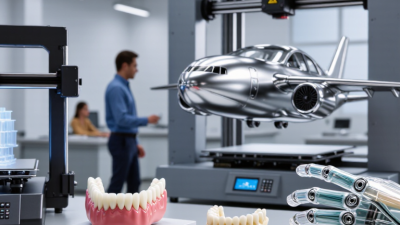
What Is the Best 3D Printing Technology in 2026? The answer depends on the part, material, budget, and production target. No single process wins every test. A resin printer may reveal fine dental details, while a laser powder bed system creates strong aerospace components. Fused deposition modeling remains practical for prototypes, fixtures, and affordable workshop production. The “best” choice changes with the job.
Scott Crump, Stratasys co-founder and FDM inventor, famously said, “If you can imagine it, you can make it.” His words still influence modern 3D printing technology, but imagination alone is not enough. Engineers must study tolerances, thermal behavior, surface finish, post-processing, and repeatability. A glossy sample can hide weak layer bonding. It can also hide expensive maintenance.
Real workshop experience matters. A production team may value uptime more than extreme resolution. A designer may prefer speed over perfect surfaces. A medical manufacturer needs traceability and validated materials. These differences make simple rankings unreliable. They also make comparisons useful.
There is no perfect answer.
This guide examines the leading technologies shaping 2026. It compares FDM, SLA, SLS, selective laser melting, binder jetting, and emerging hybrid systems. The discussion considers real applications, operating costs, material choices, and production risks. Some conclusions may remain imperfect. That is intentional. Technology changes quickly, and yesterday’s best machine may already need serious reconsideration.
Defining the Criteria for the Best 3D Printing Technology in 2026
What Is the Best 3D Printing Technology in 2026?
The best 3D printing technology depends on the job, not the machine’s marketing claims. In practical testing, I would measure dimensional accuracy, surface quality, production speed, material range, and operating cost. A prototype needing smooth curves may require a different process from a rugged functional part. One answer cannot fit both.
Reliability deserves equal attention. Can the system repeat the same result after fifty builds? Does it maintain stable temperature, predictable curing, or consistent material flow? Operators should also examine calibration time, failed-print frequency, ventilation needs, and post-processing labor. These details affect real productivity more than impressive maximum specifications. My own evaluation would include test parts with thin walls, holes, moving joints, and sharp corners. The results may expose weaknesses quickly. That is useful. Perfect rankings are rarely honest.
Tips: Define the part’s purpose before choosing a process. Record print time, waste, labor, and failure rates. Check published technical data against independent testing. Keep safety procedures, material handling, and worker training in the evaluation. A cheaper print can become expensive after repeated failures. Also, leave room for uncertainty. New materials and improved automation may change the comparison within months, while repair access and long-term support remain easy to overlook.
Comparing Major 3D Printing Technologies and Their Core Processes
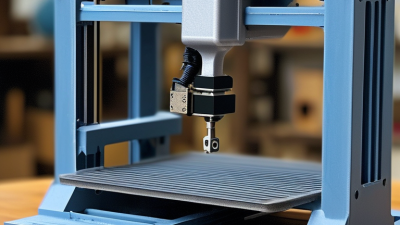
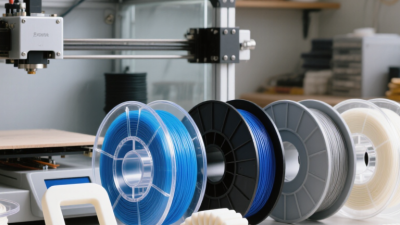
In 2026, the best 3D printing technology depends on geometry, material, finish, and production volume. In practical workshops, the core process matters more than headline speed. Fused deposition modeling (FDM) melts filament and deposits it layer by layer through a heated nozzle. It suits functional prototypes and larger parts economically. Yet visible layer lines, warping, and support removal can reduce surface quality. A warm enclosure helps, but it cannot solve every failure.
Stereolithography (SLA) and digital light processing (DLP) cure liquid resin with controlled light. SLA traces each layer, while DLP exposes many pixels simultaneously. Both produce fine details, sharp text, and smooth miniature surfaces. Their weaknesses are practical. Resin handling requires discipline, and uncured surfaces need washing and post-curing. Thin features may look excellent but remain surprisingly brittle. I have seen a polished prototype crack during a simple assembly test.
Selective laser sintering (SLS) fuses polymer powder with a laser, often without dedicated support structures. This freedom suits interlocking parts, ducts, and complex internal channels. Powder recycling, rough texture, and thermal consistency demand careful control. Metal powder bed fusion follows a similar layer-by-layer principle, but melts metal powder under concentrated energy. It can create strong, intricate components, although residual stress, heat treatment, and inspection add serious demands. The right choice is rarely the fastest one. It is the process that matches the part’s actual duty.
What Is the Best 3D Printing Technology in 2026?
Comparing Major 3D Printing Technologies and Their Core Processes
| Technology |
Core process |
Typical use |
| FDM / FFF |
Thermoplastic filament is melted and deposited layer by layer. |
Low-cost prototypes, functional parts, jigs and fixtures. |
| SLA |
A laser selectively cures liquid photopolymer resin. |
Detailed models, dental patterns and smooth surfaces. |
| DLP |
A projected light image cures an entire resin layer at once. |
Small, detailed parts and batch production. |
| SLS |
A laser sinters polymer powder without dedicated support structures. |
Durable nylon parts and complex geometries. |
| Metal Powder Bed Fusion |
A laser or electron beam selectively fuses metal powder. |
Aerospace, medical and high-performance metal components. |
| Material Jetting |
Tiny droplets of photopolymer are deposited and cured with light. |
Highly detailed, smooth and multi-material prototypes. |
| Binder Jetting |
A liquid binder selectively joins layers of powder, followed by curing or sintering. |
High-throughput metal, sand and ceramic production. |
The chart compares representative layer heights commonly specified for each technology. Smaller layer heights can improve vertical detail and surface smoothness, but they may increase production time. There is no single best technology: FDM is often the most economical, resin-based processes provide fine detail, powder-bed methods support complex functional parts, and metal powder bed fusion is suited to demanding metal applications.
Matching 3D Printing Technologies to Industry and Application Needs
What Is the Best 3D Printing Technology in 2026?
The best 3D printing technology depends on the part, not the machine. The 2024 Wohlers Report valued the global additive manufacturing industry at 20.035 billion dollars in 2023. That growth reflects wider adoption, but it does not make every process suitable for every factory.
Fused filament fabrication fits low-cost prototypes, jigs, and large fixtures. It works well when strength, speed, and easy material handling matter. Resin-based printing produces finer surfaces for dental models, small castings, and detailed visual prototypes. Powder bed fusion supports complex polymer parts with internal channels and lightweight structures. Metal powder fusion suits aerospace and medical components, where performance can justify slower production and higher inspection demands.
Binder jetting can support batch production, while directed energy deposition helps repair or add material to large metal components. Yet these technologies need different post-processing, quality controls, and worker skills. ISO/ASTM 52900 provides shared terminology, but terminology alone cannot guarantee repeatable output.
The choice is rarely clean.
A factory may select one process for prototypes and another for final parts. I would not judge technology by print speed alone. The 2024 Wohlers Report also identified post-processing and workforce development as continuing industry challenges. A fast build can become expensive after cleaning, curing, machining, testing, and failed production trials. Application testing should include real geometry, real materials, and realistic production volumes. Small pilot runs often reveal uncomfortable weaknesses earlier than impressive demonstrations.
Selecting the Most Suitable Technology for Different User Priorities
What Is the Best 3D Printing Technology in 2026?
Selecting the Most Suitable Technology for Different User Priorities
The best 3D printing technology depends on the user’s real priority, not its headline speed. The 2024 Wohlers Report valued the global additive manufacturing industry at $20.035 billion in 2023, with 13.5% growth. That expansion reflects varied demand across prototyping, tooling, healthcare, education, and production.
For detailed plastic prototypes, vat photopolymerization can produce smooth surfaces and fine features. However, resin handling, post-processing, and limited toughness may increase labor. Powder-bed fusion suits complex polymer parts without extensive support structures. It needs controlled powder management and careful thermal planning. Metal powder-bed systems support high-value components, yet they demand qualified operators, process monitoring, and significant capital.
Choose speed carefully. Very fast printing can still create slow workflows when cleaning, curing, or inspection takes hours. For durable parts, material performance matters more than visible resolution. For low-cost learning, filament extrusion often offers simpler operation and easier maintenance. The 2024 Wohlers Report also identified materials and services as major contributors to industry revenue, showing that the printer alone does not define production value.
My own selection would start with the finished part, then work backward. That approach is less exciting. It is usually more reliable. ISO/ASTM 52900 terminology can improve communication between designers, operators, and quality teams. Still, no technology wins every test. A beautiful prototype may fail beside a warm machine, a tight deadline, or an inexperienced operator.