Why Are 3D Printing Applications Growing So Fast?
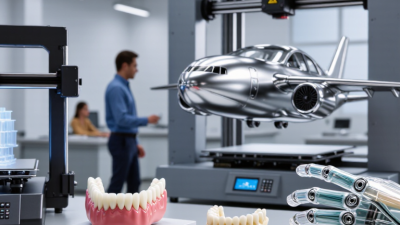
3d printing applications are spreading from design studios into clinics, factories, classrooms, and small workshops. The change is visible in ordinary objects. A lightweight fixture, dental model, or replacement bracket can be made near its point of use. This flexibility matters because teams can test shapes quickly, revise files, and avoid some tooling delays. It also supports customized parts and shorter production runs when standard products do not fit. Better design software and a wider range of printers have lowered entry barriers for many users. Yet access is only part of the story. A printer does not guarantee a useful, safe, or consistent part. Materials, calibration, finishing, and inspection still matter. Not magic.
Growth also reflects practical advantages, not novelty alone. Engineers may create internal channels or lattice structures that conventional methods struggle to produce. Clinicians can use patient-specific models to plan procedures, while manufacturers print jigs that help workers position components. These uses depend on suitable materials, trained operators, and careful quality checks. Costs and speed vary by part, machine, and production volume. For large, simple objects, conventional manufacturing may remain cheaper. That tension is easy to overlook. Details matter. Growth is uneven, and some promises still need stronger evidence. Understanding why the field is growing means looking beyond the machine. Workflows, reliability, and the problem each part solves matter.
How Layer-by-Layer Fabrication Differs from Conventional Manufacturing
Conventional manufacturing often starts with a solid block, sheet, or mold, then shapes material through cutting, casting, or forming.
Layer-by-layer fabrication works differently: a machine deposits or solidifies material in thin slices, following a digital model. The difference is visible. A small bracket can emerge with internal channels that would be difficult to machine from a solid piece.
This method can reduce scrap because material is placed mainly where the part needs it. It can also avoid some dedicated tooling, making one-off parts and design changes easier to produce. A technician might adjust a model in the morning and print a revised component later that day. Yet each layer must bond reliably, and orientation can affect strength, surface texture, and dimensional accuracy.
Not always faster.
Conventional processes often remain more practical for large production runs, consistent finishes, or parts made from materials that are hard to print. Printed surfaces may show fine stair-step lines, especially on curved edges, and supports can leave marks that require careful removal. That extra work is easy to overlook in a digital design. Comparing methods means checking the part’s geometry, material needs, quantity, and acceptable tolerances—not just counting production hours.
Market Momentum: Wohlers Reports 11.1% Growth to $20.0B in 2023
The 2024 Wohlers Report puts the global additive manufacturing industry at $20.0 billion in 2023, up 11.1% from the previous year. The 2023 edition reported 18.3% growth in 2022. The slower pace still marks substantial expansion, but it deserves careful reading: industry revenue includes equipment, materials, and services, not just finished printed parts. Growth does not mean every application is profitable.
The figures help explain why adoption keeps spreading. A factory can print a replacement fixture near the production line, while a medical team can create a patient-specific anatomical model for planning. These uses can reduce waiting and avoid some specialized tooling. Yet a printed part is not automatically cheaper or faster; qualification, finishing, and consistent material performance still matter. Small details count.
Wohlers’ estimate is a useful industry-wide signal, not a direct measure of how often each application succeeds. The report tracks a diverse market, and revenue can rise even as individual projects stall. That tension is easy to miss. For buyers, the practical question is whether printing solves a specific production problem better than existing methods—not whether the market is growing.
Why Are 3D Printing Applications Growing So Fast? — Market Momentum: 11.1% Growth to $20.0B in 2023
Global additive manufacturing market indicators and established application areas
| Dimension |
2022 |
2023 |
What the data indicates |
| Global market revenue |
Approximately $18.0 billion |
$20.0 billion |
Revenue expanded across additive manufacturing products and services. |
| Year-over-year growth |
— |
11.1% |
The market grew by more than one-tenth compared with the previous year. |
| Approximate revenue increase |
— |
$2.0 billion |
Calculated from the rounded 2022 and 2023 market revenue figures. |
| Prototyping and product development |
Application area |
Application area |
Supports rapid iteration of designs and production of functional prototypes. |
| Healthcare and dental production |
Application area |
Application area |
Used to make patient-specific items such as dental models, surgical guides, and certain implants. |
| Aerospace and industrial parts |
Application area |
Application area |
Enables production of complex geometries and lightweight components, including low-volume or replacement parts. |
How Printer and Material Advances Are Expanding Production Readiness
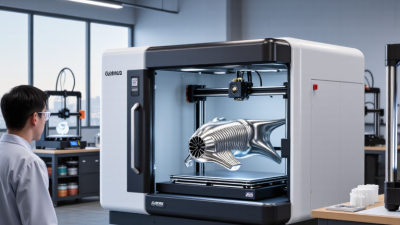
Production readiness is growing as printers become more stable, predictable tools. Improved motion systems and temperature control help reduce variation between builds. Sensors can track conditions such as chamber heat and print progress, giving operators useful signals before a part fails. A visible alert is helpful. It is not a quality guarantee.
Material advances matter just as much. More consistent powders, resins, and engineering-grade filaments can support demanding parts, provided they are matched to the right machine and settings. For example, a technician may check powder flow, drying conditions, or layer bonding before approving a production run. These steps take time, but they make results easier to reproduce. Material data sheets help, though real-world testing still matters.
Software now connects design, machine settings, and inspection records more closely. This can make it easier to repeat a qualified build and trace how a part was made. Larger build areas and improved multi-part scheduling can also increase output, but they do not automatically lower costs. Post-processing, inspection, and operator skill remain part of the calculation. I have seen a promising prototype become less practical when finishing took longer than printing. That trade-off deserves attention.
Where Adoption Is Growing: Aerospace, Healthcare, Automotive, and More
Across aerospace, additive manufacturing helps engineers make lightweight brackets, ducting, and complex internal channels. These shapes can reduce part counts, which may simplify assembly. Every gram matters in flight. Still, printed components need careful testing for strength, heat resistance, and consistency. A clever shape is not automatically a safe one.
Healthcare adoption is growing in a different way. Hospitals and manufacturers use 3D printing for anatomical models, surgical planning tools, dental devices, and some patient-specific implants. A model with visible blood vessels can help a surgical team discuss a difficult procedure before entering the operating room. Materials and production controls matter greatly, especially when a device contacts the body. Not every custom design is clinically appropriate.
Automotive teams use printed parts for prototypes, fixtures, replacement components, and low-volume production. A designer can revise a dashboard clip quickly instead of waiting for a new mold. That saves time, though it does not always lower total cost. Construction, consumer products, and education are also exploring printed components and models. The picture is not perfectly tidy: it is tempting to call each application a breakthrough, but some parts remain better made through conventional methods. Material limits, finishing, and inspection still shape what makes practical sense.
Why Are 3D Printing Applications Growing So Fast?
Global additive manufacturing industry revenue, 2019–2023 (US$ billions)
What’s driving adoption: 3D printing can produce complex, lightweight aerospace components; patient-specific medical devices and anatomical models; and automotive prototypes, production tools, and selected end-use parts. It is also used in areas such as industrial equipment and consumer products.
The chart shows total industry revenue, not revenue by application sector. Source: Wohlers Report 2024; figures are reported in US$ billions.
Growth Outlook: Grand View Research Forecasts 23.5% CAGR, 2024–2030
Grand View Research forecasts the global 3D printing market will expand at a 23.5% compound annual growth rate from 2024 to 2030. That is a striking pace. It reflects growing use beyond prototypes: factories can print replacement parts on demand, while medical teams can produce patient-specific models for surgical planning. In practice, a printed component may move from a digital file to a test fit on a workbench in hours, rather than waiting for a conventional production run.
The outlook is ambitious, not guaranteed. The Wohlers Report 2024 put additive manufacturing industry revenue at about $20.0 billion in 2023, up 11.1% from 2022. Its industry scope differs from Grand View Research’s market definition, so the figures should not be compared as if they measured exactly the same thing. Still, the contrast is useful: a 23.5% forecast assumes adoption accelerates. That depends on repeatable quality, suitable materials, and costs that make sense for each part. A failed print can waste powder, machine time, and a day of production. Growth is real, but uneven.